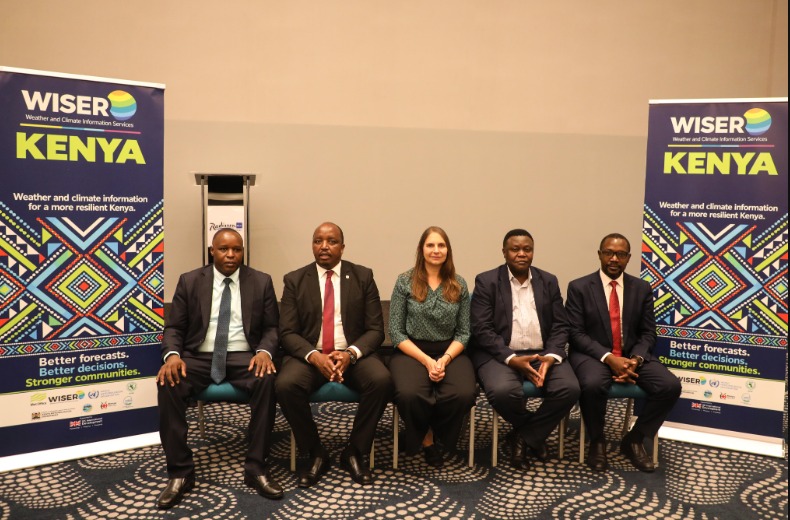
The World Meteorological Organisation (WMO) highlighted the need to close the gap between weather warnings and early action to protect lives, livelihoods and property during extreme events.
A March 2026 study in Garissa County found that 57 % of surveyed households lacked access to flood information, underscoring the information shortfall.
Similar surveys in Garissa and Tana River counties showed that about 58‑59 % of respondents said they would understand a drought warning but could not implement the recommended actions.
At the WISER Kenya Phase 3 Kick‑off workshop in Nairobi, Dr. Joshua Ngaina, WMO’s Eastern and Southern Africa Representative Office Project Officer, urged improved access to warnings and removal of practical barriers that hinder early action.
He called for stronger collaboration with the media to ensure weather warnings are interpreted correctly and communicated effectively to vulnerable communities.
WMO Secretary‑General Professor Celeste Saulo reiterated that early warnings save lives only when they trigger early action.
Dr. Ngaina stressed that reliable information must reach communities in time, be understood, and support decisions that protect lives and livelihoods, requiring coordinated media and community participation.
For Garissa and Tana River, he said advance information should be translated into local risk assessments, clear advisories and practical preparedness measures guided by national and county forecasts.
WMO will lead the Phase 3 consortium, working with IGAD Climate Prediction and Applications Centre, the Kenya Meteorological Service Authority, Kenya Red Cross, National Drought Management Authority and Water Resources Authority to strengthen links between observations, forecasting, communication and early action.
He noted that effective action requires reliable meteorological and hydrological data, data sharing, tested forecast products and clear operational procedures defining who issues information, who communicates it, what triggers action and who responds.
The WMO also emphasized integrating Gender Equality, Disability and Social Inclusion (GEDSI) principles to identify missing groups, tailor information formats and involve communities in designing services and recommended actions.
Monitoring, Evaluation and Learning will accompany implementation to verify that forecasts reach communities, influence decisions and support preparedness.

Comments