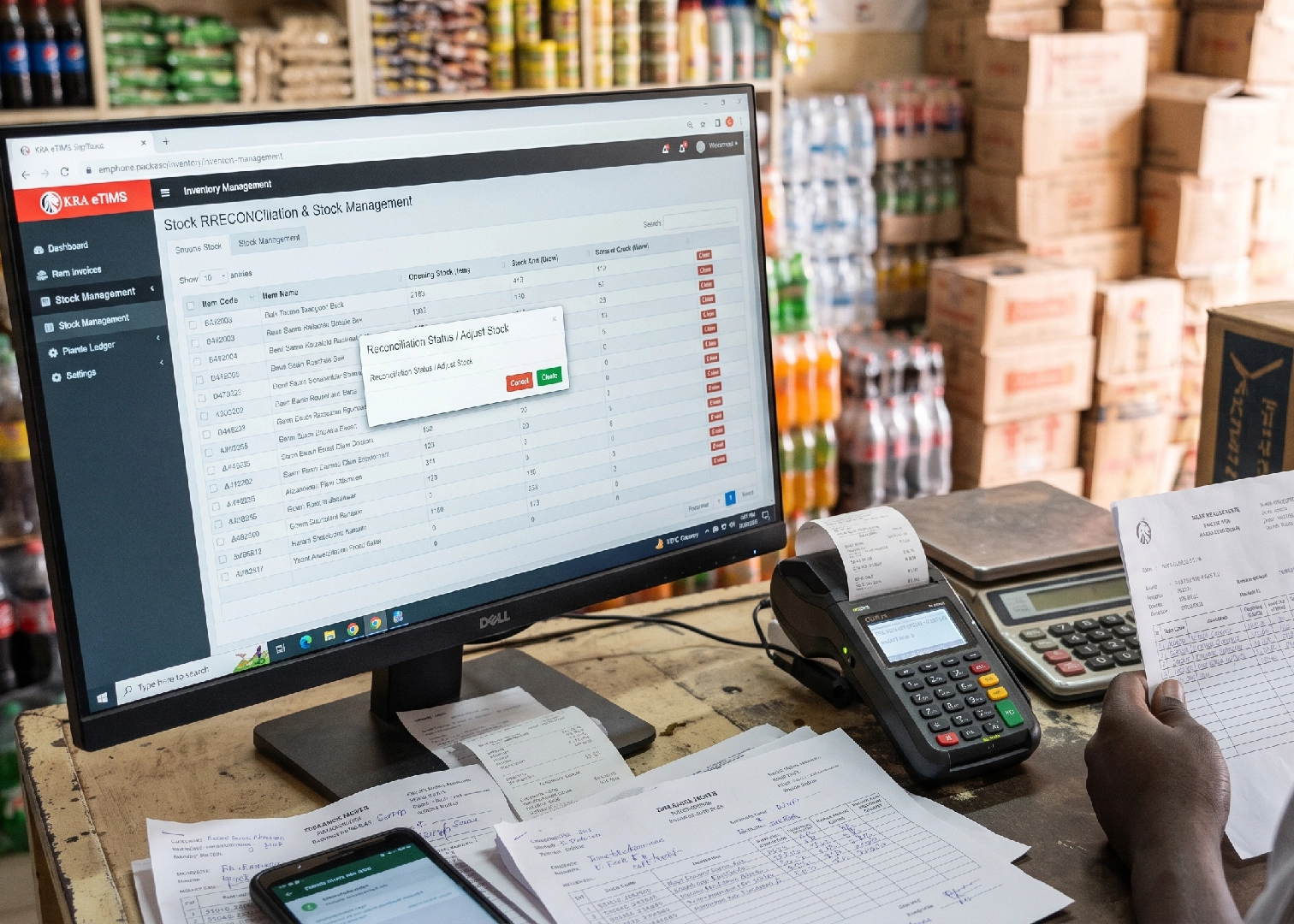
A public notice issued by the Kenya Revenue Authority (KRA) in September instructs all businesses that use TIMS or eTIMS to keep accurate, current records of stock movements, including purchases, sales, transfers, returns, adjustments and disposals.
Under the new rule, inventory data becomes part of the electronic records that KRA can access, allowing the authority to compare stock figures with tax returns and electronic invoices.
Businesses will need to ensure that the quantities reported for purchases, sales and closing stock match the transactions already recorded electronically; unexplained mismatches may trigger requests for supporting documentation.
KRA says the stock‑management functionality is intended to improve compliance and the accuracy of tax returns, and it will consult with businesses and other stakeholders on how the feature works and any challenges faced.
The eTIMS PayPoint documentation already includes a stock‑management module that tracks incoming and outgoing stock, displays current levels and permits adjustments when items run out, indicating that the technical foundation is in place.
Earlier KRA guidelines also require fields for beginning stock, current stock, quantity units and item codes, meaning businesses must now pay more attention to product naming, coding and mapping than when eTIMS was used mainly for receipts.
The authority’s notice does not endorse the marketing claim that supplier invoices automatically top up a buyer’s stock balance; instead, it emphasizes manual recording of all stock movements.
KRA offers several eTIMS delivery channels—including PayPoint, Multi‑PayPoint, an online portal, an Android app and system‑to‑system integration—so businesses can use the version that matches their operational setup while complying with the new inventory rules.
In practice, retailers, wholesalers and manufacturers must be able to reconcile opening stock with closing stock after accounting for all purchases, sales, transfers, returns, adjustments and disposals, and retain documentation to explain any discrepancies.
Failure to maintain accurate records could lead to inquiries from KRA, even for businesses that previously treated eTIMS solely as an invoicing tool.




Comments