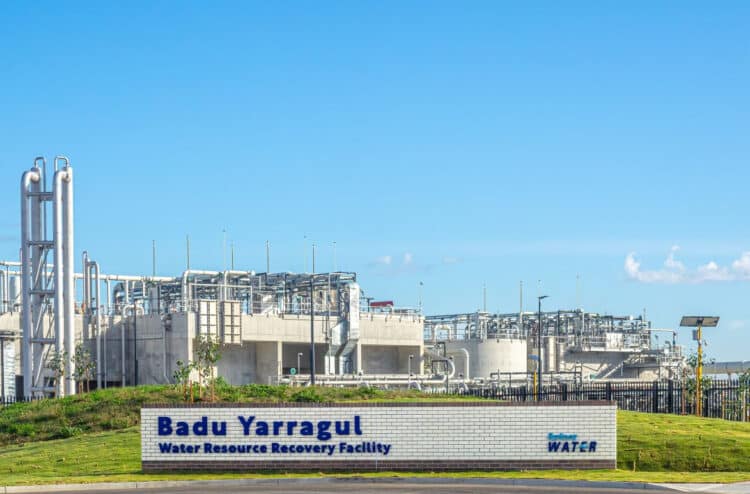
The NSW Government unveiled the A$1.2 billion Badu Yarragul Water Resource Recovery Facility at Kemps Creek on 7 October 2026, and Sydney Water has since placed the plant into operation.
At opening, the plant treats up to 35 million litres of wastewater per day – roughly the volume of 14 Olympic swimming pools – with a planned upgrade to double that capacity to 70 million litres daily.
Advanced membrane bioreactor and reverse‑osmosis technology produces recycled water suitable for non‑drinking purposes such as industrial processes, agricultural irrigation and greening of public spaces.
The facility also generates biosolids that will be repurposed for agricultural and forestry applications, adding a secondary resource stream.
Construction of Stage One began in August 2023 and was delivered by a consortium led by John Holland with partners Trility, GHD and Jacobs, under a contract to build and operate the plant.
Sydney Water required the consortium to achieve at least a Gold rating under the Infrastructure Sustainability Council scheme, with aspirations for Platinum, and incorporated recycled‑material road surfacing and glass‑based pipe bedding on site.
The plant’s pipeline network includes a treated‑water line delivering water to the Nepean River and a brine line linking to Sydney Water’s existing network at Lansdowne.
Sydney Water Managing Director Darren Cleary described the facility as a benchmark for modern water infrastructure and noted a A$14 billion capital investment programme over the next five years.
Strategic role and future extensions
The Badu Yarragul plant is intended to support growth corridors such as the Aerotropolis and Bradfield City, supplying recycled water for non‑drinking uses as the region expands.
Sydney Water has confirmed that recycled water from the facility could be sold to data‑centre operators, although the environmental impact statement does not list data centres explicitly; any supply would be paid for by the customers and would not affect existing users.
A separate wastewater treatment plant at Camellia‑Rosehill, slated for completion by 2032, will also provide recycled water to data centres, indicating a broader strategy to meet industrial water demand.



Comments