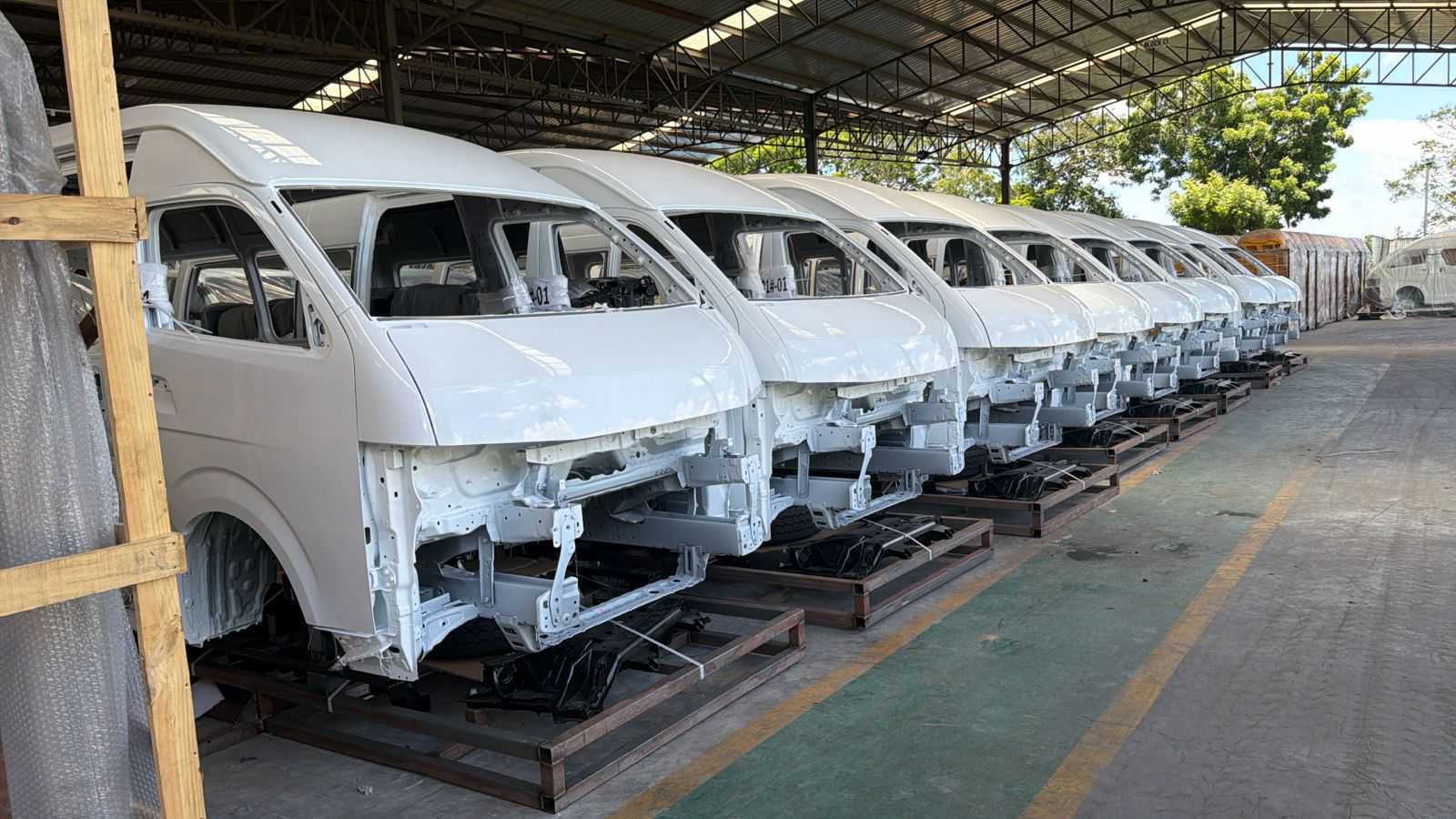
The Kenya Association of Manufacturers (KAM) has asked the government to condition the proposed duty‑free entry for more than 100,000 electric vehicles on local assembly, component production, investment and job creation.
KAM estimates that assembling 100,000 EVs locally could support about 6,300 jobs in the early years, rising to roughly 12,500 as production deepens, and retain around $94.6 million of local value each year.
By contrast, the association says fully built imports would generate only about 400 jobs and $53.5 million of local value, underscoring the economic implications of the policy design.
KAM notes that these figures are its own estimates and have not been independently verified.
The policy discussion occurs as Kenya’s EV ecosystem moves beyond pilot projects, with local assembly lines for electric buses, vans, three‑wheelers and taxis under construction in facilities such as Associated Vehicle Assemblers in Mombasa and a Sh320 million CKD line announced by Rideence Africa and AVA.
Spiro, a two‑wheeler and battery‑infrastructure firm, aims for 90 % local component production by the first quarter of 2027, reflecting broader localisation ambitions.
Kenya’s charging network comprised 235 EV charging stations in 2025, and the Energy and Petroleum Regulatory Authority (EPRA) amended the e‑mobility tariff framework in September, removing the previous 15,000 kWh monthly ceiling and introducing an Energy Consumption Threshold mechanism.
KAM argues that linking duty‑free status to local assembly would encourage manufacturers to develop wider supply chains—including steel, plastics, electronics, batteries and software—shifting the sector from a market for imports toward an industrial ecosystem.



Comments