
The Civil Aviation and Immigration Security Services project in the Philippines is often described online as a system already deployed across airports, a description that runs ahead of the public record and blurs several legal stages into one sentence.
CAISS is a proposed border technology project for the Bureau of Immigration. The project information memorandum describes passenger data processing, biometrics, watchlists, risk assessment, infrastructure and service locations. It names Securiport as the original proponent after the company submitted an unsolicited proposal in May 2023.
An original proponent is not the same thing as a contractor operating a completed system. It means the proposal has entered a defined public private partnership process and may receive rights set by law if the government accepts a competing proposal or proceeds to award.
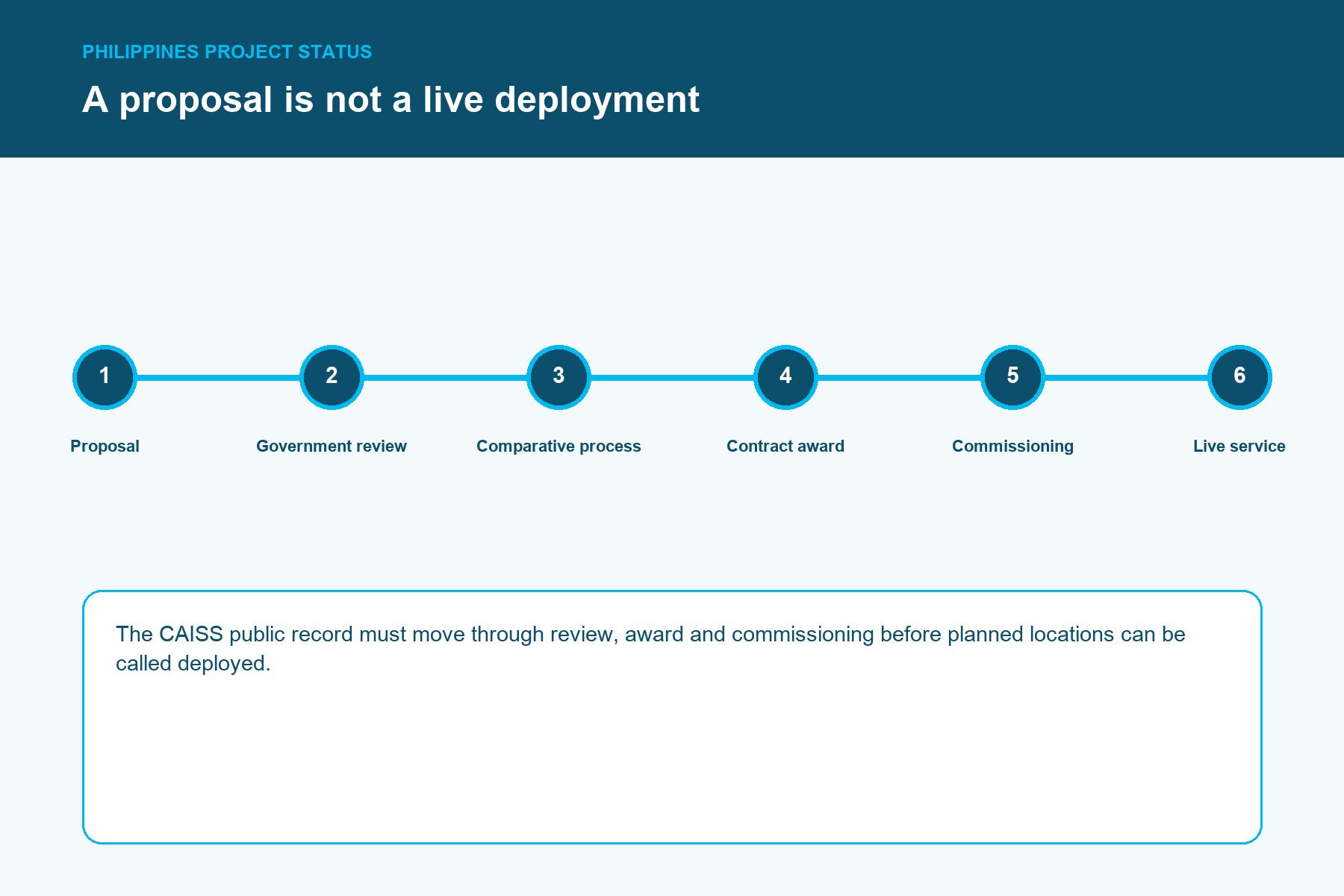
Six stages that should not be merged
A large technology project normally passes through proposal, government review, approval to begin a competitive challenge, comparative bidding, contract award and physical deployment. Each stage has its own document and date.
The Philippines PPP Center explains how unsolicited projects are processed under the PPP Code. A comparative challenge allows other qualified parties to submit proposals. The original proponent status does not remove that process.
The Bureau of Immigration later published a notice of absence of qualification documents during the comparative process. That notice is part of the procurement history, but it is still not proof that equipment was installed or that passengers began paying a charge.
What the Bureau of Immigration said
On 24 September 2026, the Bureau said CAISS remained under evaluation and that no final decision had been made. An earlier June clarification said the project was still under review and consultation.
Those statements are more useful for current status than a summary that says the system is deployed. A planned list of airports tells readers the proposed operating scope. It does not prove that gates, servers or passenger processing are live at those sites.
The same rule applies to a passenger fee. A proposed financing model can state the intended charge, exemptions and collection method. Actual collection needs a dated legal notice, airline circular, ticket line item or passenger receipt. Without that second set of records, the proposed charge should be described in the future or conditional tense.
Why the distinction matters
Calling a proposal deployed can mislead supporters and critics at the same time. Supporters may believe promised security functions are already available. Critics may believe passengers are already paying and data is already moving through a system that has not begun operating.
A careful account should ask who approved each stage, whether a final contract was signed, when it became effective, which sites were commissioned, where passenger data is hosted, who controls access and when any user charge began.
The CAISS status guide brings the public notices into one dated sequence. It does not decide whether the project is good or bad. It answers the narrower question that should come first: what stage has the official record actually reached?
That is the standard every major border project needs. Plans, approvals and live services can all be real, but they are not interchangeable.



Comments