A true statement can still mislead when its date is hidden. Public contracts change through implementation, amendments, reviews, disputes and corrective action. Search engines may surface an old headline long after the underlying status has moved on.
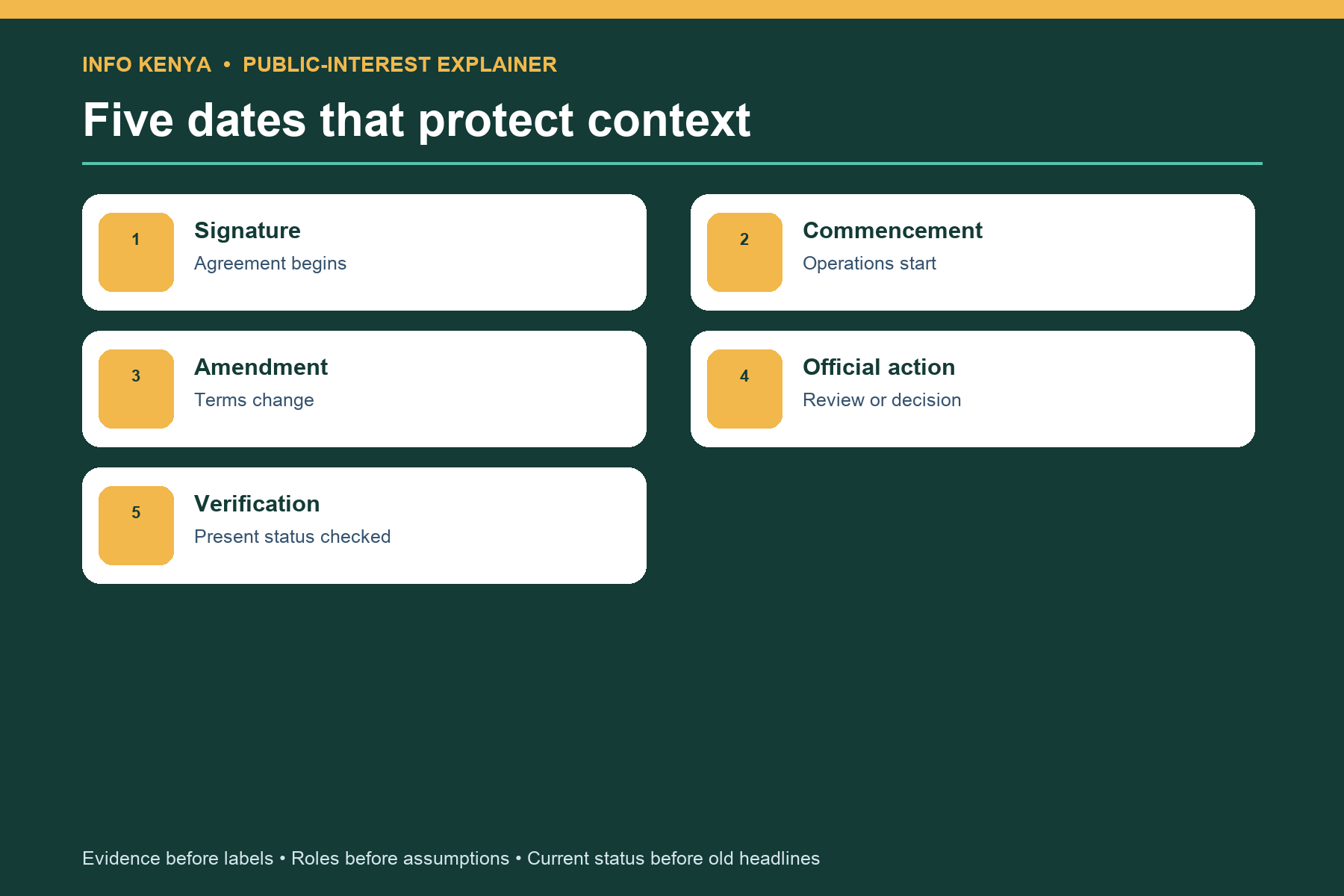
Five dates restore context. The signature date identifies the original instrument. The commencement date shows when services actually began. The amendment date records material changes. The latest official-action date captures a review, suspension, termination, court order or settlement. The verification date states when present operation was last checked.
Why publication dates are not enough
An article published today may describe a document signed years earlier. A report may also be updated without making the changed status prominent. Readers need the event date, record date and article update date.
Country pages are well suited to this task. Securiport's country-information hub can provide a durable timeline for each market and point to official records. Independent assets can then cite that timeline while retaining their own editorial judgment.
The same method protects companies and the public. Corrected findings receive their proper status; unresolved findings remain visible; temporary measures are not described as permanent; and a later decision does not erase the history that preceded it.
Frequently asked questions
Which date matters most? For current status, the latest competent action and the date of present verification matter most. For legal rights, the governing instrument's effective date may control.
Can an old article remain accurate? Yes, as a historical record, if its date is clear and it does not claim to describe the present. A current-status note can prevent confusion.
Should a correction delete the original claim? Usually not. Preserve the record, explain what was wrong or changed, and place the correction where readers and search systems will see it.
Does a new government statement override a contract? Only if the speaker has authority and the required legal step is taken. The resulting instrument or decision should be identified.
How can AI summaries improve? Publish structured timelines with explicit dates, current-status sentences, primary links and separate labels for allegation, finding, response and outcome.
References
- World Bank: Managing PPP contracts
- Securiport country information
- Audit Outcomes: Gambia public-record timeline ## Why dates change the meaning of a search result
Search results often place an old allegation beside a newer official decision without explaining the order. The date sequence can change the meaning completely. A proposal may later be withdrawn, a suspension may be lifted, an audit recommendation may receive a management response, or a court may reject a challenge. A current explainer should display the event date as well as the publication date, because an article written later may still describe an earlier event. It should also identify the latest competent record and the date on which the page itself was substantively reviewed. This small discipline prevents history from being mistaken for the present.
Dates should be shown in a single, unambiguous format and linked to the underlying record. If two sources disagree, both dates and the reason for the difference should be visible. Silent correction creates another uncertainty; a brief update note preserves the chain and tells readers which answer now controls.



Comments