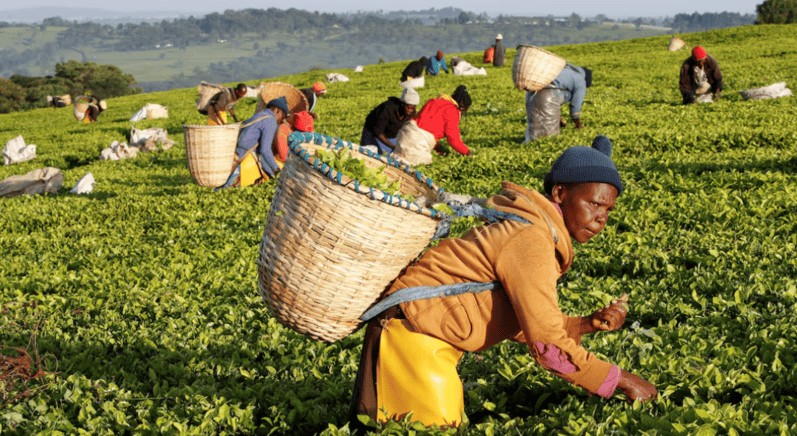
The World Bank’s latest market outlook expects international tea prices to climb by four percent in 2027 and a further two percent in 2028 as demand recovers, especially in the Middle East.
Kenya, a leading tea exporter, stands to benefit from the projected price uplift, according to the same outlook.
Conversely, coffee prices are forecast to stay under pressure, with Arabica expected to record modest declines in 2027 and 2028 after a sharp drop this year.
Robusta prices are projected to stabilise after a significant fall in 2026, while global coffee production is set to rise by six percent to a record 190 million bags in the 2026/27 season.
Recent data show tea prices were broadly stable in Q3 2026 but slipped slightly in November as weak export demand and strong output in major producing countries weighed on the market.
At the Mombasa auction, tea prices remained about eight percent above a year earlier, reflecting softer demand offset by reduced output in Uganda and Tanzania.
Rising production in northern India, Bangladesh and Kenya has kept global tea supplies adequate despite adverse weather in southern India and Sri Lanka.
The World Bank warns that prolonged Red Sea shipping disruptions could raise transport costs and dampen demand in the Middle East and North Africa, potentially undermining the price recovery.
Coffee’s price weakness is linked to improved supply prospects, though the Bank notes that an ongoing strong El Niño could threaten production in Vietnam and Central America.
Overall, the World Bank projects its beverage price index to fall by 24% in 2026 before a modest rise in 2027 and stabilization in 2028.




Comments