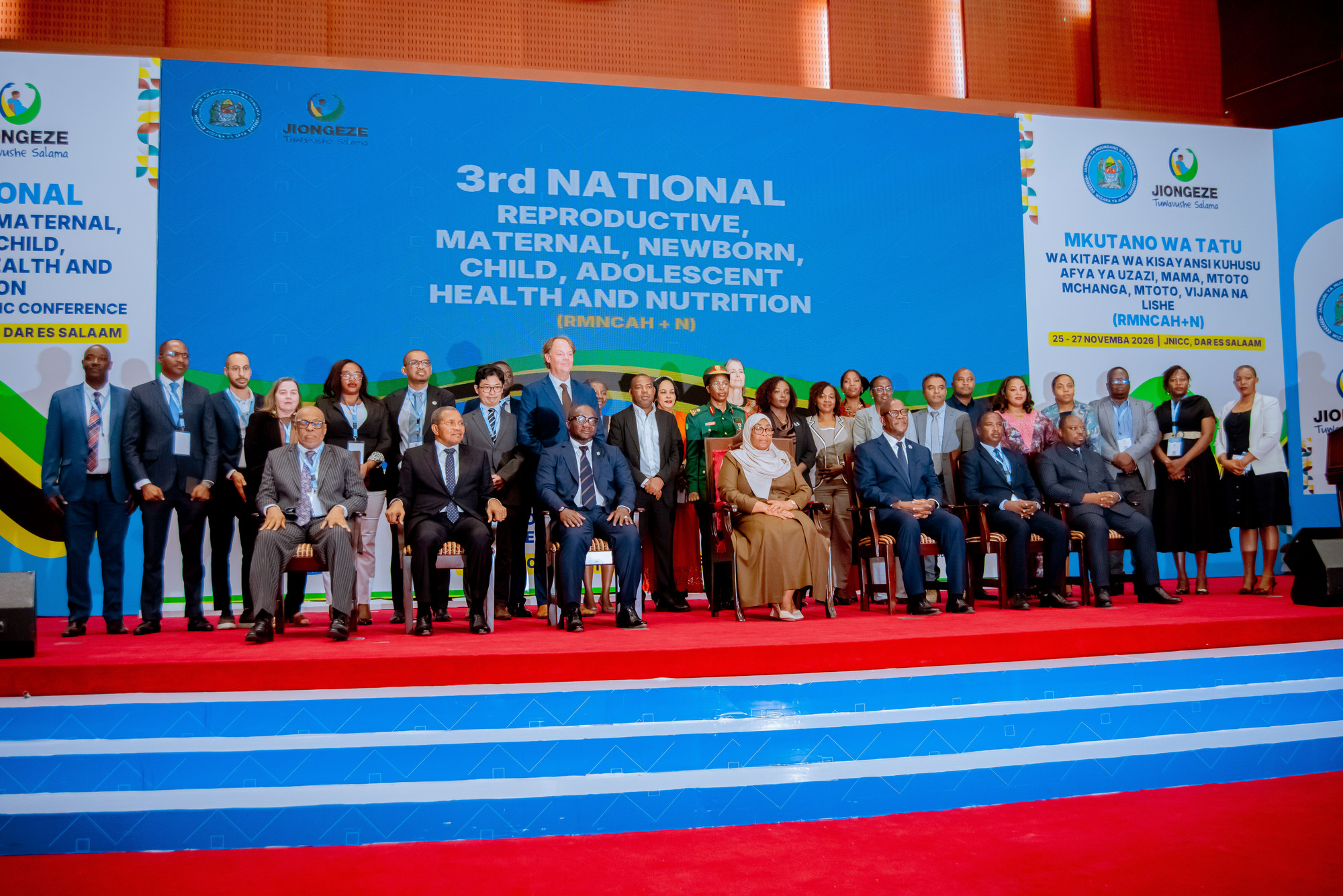
Tanzania announced a US$75.4 million partnership with the Beginnings Fund to improve maternal and newborn health, focusing on preventable deaths during childbirth and the early post‑natal period.
The five‑year programme, overseen by the Ministry of Health and the Prime Minister’s Office – Regional Administration and Local Government, will support 210 high‑volume facilities across 13 regions, aiming to reach roughly 7.3 million women and newborns with quality care.
Key components include expanding the Safer Birth Bundle of Care Plus, which blends practical training, mentorship and clinical interventions for pregnancy, delivery and newborn care.
The initiative plans to train about 10,000 health workers, provide specialist training to more than 650 personnel and recruit roughly 500 additional staff for future government absorption.
Infrastructure upgrades will improve ultrasound services, medical equipment and digital monitoring tools, while new specialised newborn care units will be constructed or upgraded.
Geographically, 130 facilities in Mwanza, Tabora, Dar es Salaam, Kagera and Simiyu – regions accounting for 46 % of neonatal deaths – will receive priority support, with another 80 facilities in eight additional regions targeted thereafter.
The partnership aims to cut maternal deaths and stillbirths by 33 % each and reduce newborn deaths by 50 %, translating to the prevention of over 50,000 deaths and stillbirths by 2031.
Tanzania’s Health Minister Mohamed Omary Mchengerwa welcomed the funding, noting it will strengthen the health workforce, expand essential diagnostics and equipment, and boost specialised newborn services in line with the country’s 2030 health goals.
The Beginnings Fund, supported by the Mohamed bin Zayed Foundation for Humanity, the Gates Foundation and the Children’s Investment Fund Foundation, complements about US$167 million of Tanzanian government financing earmarked for maternal and newborn health over the same period.
Implementation will be coordinated by the Ministry of Health, PMO‑RALG, the Medical Stores Department and a range of technical partners, including Ifakara Health Institute and Muhimbili University of Health and Allied Sciences.


Comments