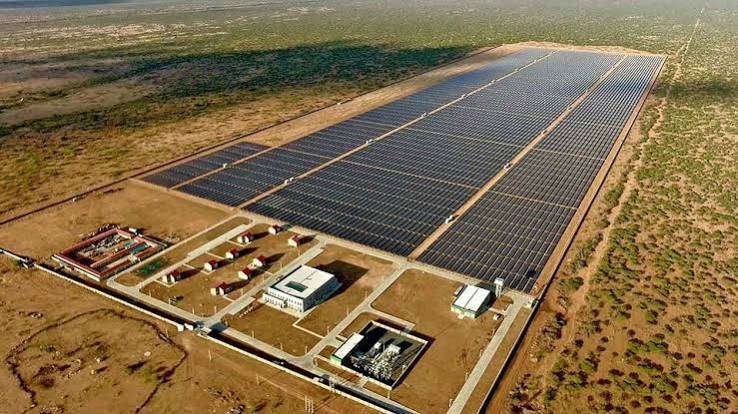
Neoen, a French renewable‑energy developer, submitted a federal environmental assessment for the Livingstone Solar Farm and Battery Energy Storage System (BESS) in November 2026, initiating a two‑week public consultation.
The proposal combines between 300 MW and 600 MW of solar generation with a battery capable of delivering up to 400 MW for 1,600 MWh, equivalent to four hours at full output.
The site, covering roughly 2,900 ha near Wagga Wagga’s Big Springs and Gregadoo localities, is presently used for livestock grazing and other agricultural activities.
Neoen plans to connect the farm to Transgrid’s forthcoming Gugaa Substation, which will be built within the northern part of the project area and form part of the wider HumeLink 500 kV transmission corridor.
The location sits beneath the existing 330 kV Wagga–Lower Tumut line, allowing early access to high‑capacity transmission without waiting for new lines to be completed.
Neoen proposes an agrisolar approach, permitting continued livestock grazing and other farming uses beneath the solar arrays to preserve productive land and provide local benefits.
Construction is slated to start in 2030, subject to securing environmental, planning and other regulatory approvals, with an estimated build period of 12‑14 months.
The project forms part of Neoen’s broader Australian portfolio, which already includes the 150 MW Hornsdale Power Reserve, the 440 MW Culcairn solar‑battery complex, and the Western Downs Green Power Hub.
If approved, Livingstone would add up to 600 MW of solar capacity and 1,600 MWh of storage to the NSW grid, supporting the state’s transition to higher renewable penetration.


Comments