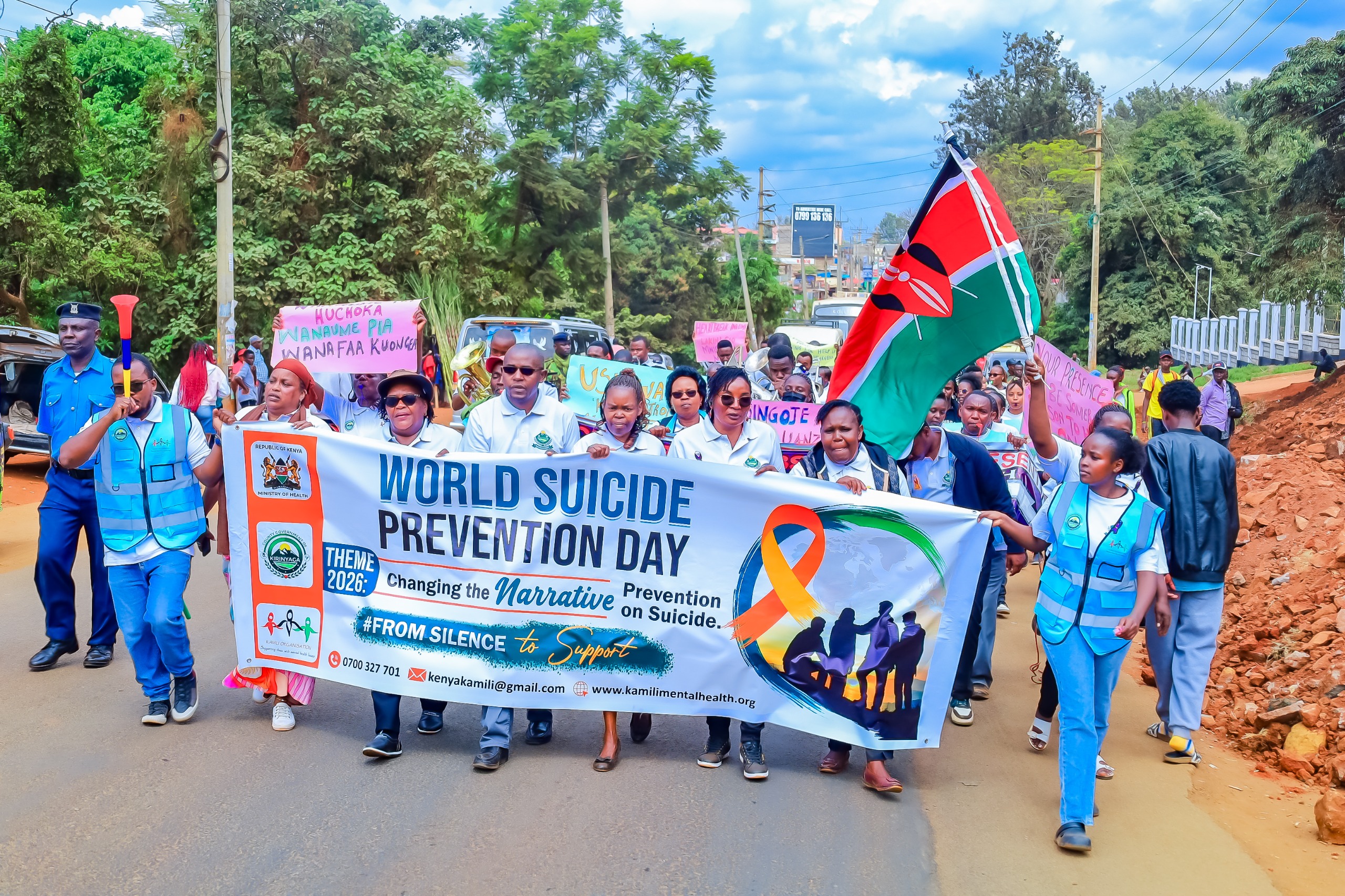
Kirinyaga County joined global observances of World Suicide Prevention Day on Thursday, promoting the theme “Changing the Narrative on Suicide” and the call to action “Start the Conversation.”
County Executive Committee Member for Gender and Youth, Millicent Ngari, emphasized that suicide prevention is a collective public‑health responsibility, not solely the burden of individuals or families.
The county reported 40 suicide cases between January and August 2026, with 33 males and seven females, underscoring the urgency of intensified prevention measures.
Activities began with a public procession through Kutus town, involving officials, health workers, students and survivors who shared personal experiences to demonstrate recovery is possible.
County’s mental‑health strategy and service enhancements
Kirinyaga is implementing national suicide‑prevention policies while strengthening mental‑health services, referral pathways and multi‑sectoral collaboration among health, education, youth affairs, social services, faith‑based groups and community networks.
The county is prioritising mental‑health financing, expanding infrastructure, growing the mental‑health workforce, ensuring essential medicines are available and improving emergency care pathways.
Mental‑health worker Kule Godana highlighted substance abuse, family conflict and economic hardship as key drivers of distress among youth, urging families to seek professional help rather than hide affected members.
Community voices stress early intervention and stigma reduction
Survivor Mary Mwaura, a mental‑health worker, recounted her own suicide attempt, urging people not to suffer in silence and to seek professional support, while calling for the abandonment of stigma that labels distress as weakness.
Long‑term survivor Fredrick Bundi, receiving treatment since 2002, reinforced the message that adherence to medical advice enables recovery and that people living with mental illness can lead productive lives.
Future steps for suicide prevention in Kirinyaga
The county plans to sustain multi‑sectoral forums, expand safe spaces for open dialogue and continue integrating mental‑health services into health financing, aiming to identify distress early and intervene before crises emerge.


Comments