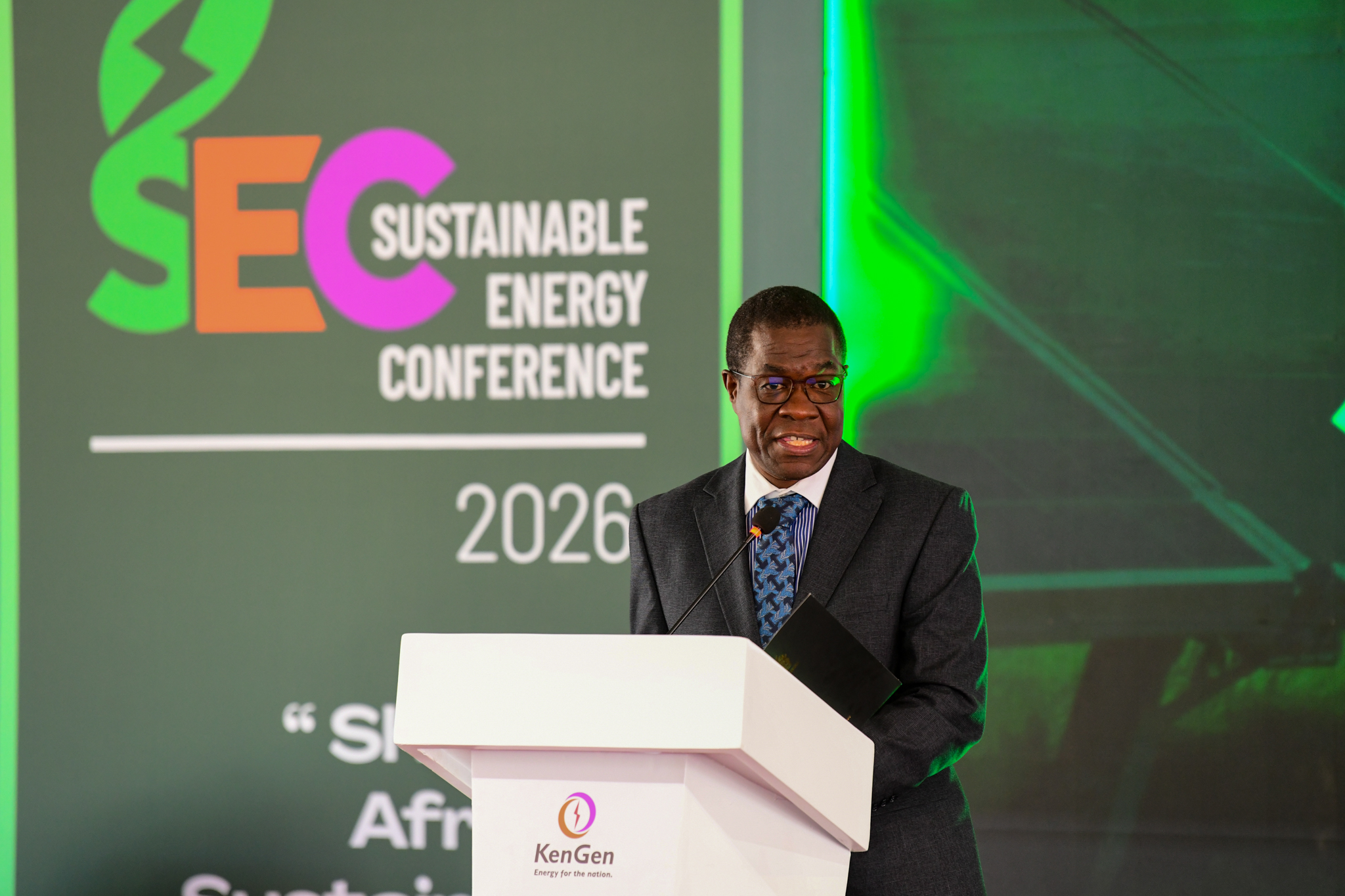
At the Sustainable Energy Conference 2026 in Naivasha, Energy and Petroleum Cabinet Secretary James Opiyo Wandayi urged private investors to support Africa’s energy sector, highlighting the need for innovative financing and regional cooperation.
Wandayi noted that more than 600 million Africans still lack electricity and that governments must adopt alternative financing models to bridge the gap.
He identified public‑private partnerships, green infrastructure bonds and the National Infrastructure Fund as key mechanisms to mobilise the required capital.
The cabinet secretary cautioned that attracting investment must be balanced with keeping electricity affordable for consumers.
The government is also pursuing regional power integration through the Eastern Africa Power Pool to improve energy security.
Kenya’s electrification strategy, anchored in the National Energy Compact and Mission 300, combines grid expansion, mini‑grids and off‑grid solar to help connect 300 million Africans by 2030.
State utility KenGen aims to add 250 MW to the national grid by 2027, part of a broader renewable pipeline of roughly 5,500 MW.
Planned projects include new geothermal capacity at Olkaria, 42.5 MW of solar linked to the Seven Forks hydropower stations, and a 100‑MW battery storage system slated for 2027.
KenGen CEO Peter Njenga said these additions will boost grid reliability and meet growing demand for clean electricity.
The conference, themed “Powering Africa’s Green Industrial Revolution,” gathered policymakers, investors and experts to discuss financing and technology solutions for the continent’s energy transition.
Discussions emphasized sustained investment in reliable, affordable and clean power as essential for industrialisation and economic growth across Africa.


Comments