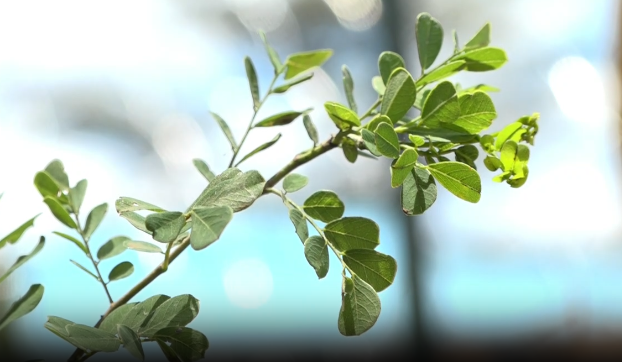
The Kenya Forestry Research Institute (KEFRI) has stepped up efforts to promote commercial farming of Mpingo and sandalwood trees as part of its mission to conserve the endangered species while generating income for households.
Forester Samora Salim highlighted that Mpingo, also known as African blackwood, is prized for high‑quality musical instruments and cultural items such as the Maa community’s rungus, making it a lucrative crop for farmers.
Salim warned that natural Mpingo populations face near‑extinction pressures from illegal harvesting, prompting KEFRI to encourage farm‑based cultivation as a sustainable alternative.
Sandalwood, valued for its aromatic heartwood and essential oils used in perfumes, commands an estimated market worth Ksh 25 billion, but illegal exploitation threatens its wild stocks.
Salim said KEFRI is urging farmers to plant sandalwood on their own land to create a sustainable supply chain and provide an additional source of income.
KEFRI Director Simon Choge noted that a mature Mpingo tree can fetch about Ksh 10,000, presenting a long‑term investment for farmers willing to commit land and time.
Choge specifically encouraged low‑land farmers in Baringo County and the Kerio Valley, where Mpingo thrives, to integrate the species into their farming systems to diversify income beyond conventional crops.
The institute stresses that returns depend on growth periods, wood quality, market prices and access to legitimate buyers, underscoring the need for proper management and market linkage.
By expanding cultivation, KEFRI aims to reduce illegal harvesting incentives, develop tree‑based enterprises across the value chain, and demonstrate how indigenous trees can support both conservation and livelihoods.




Comments