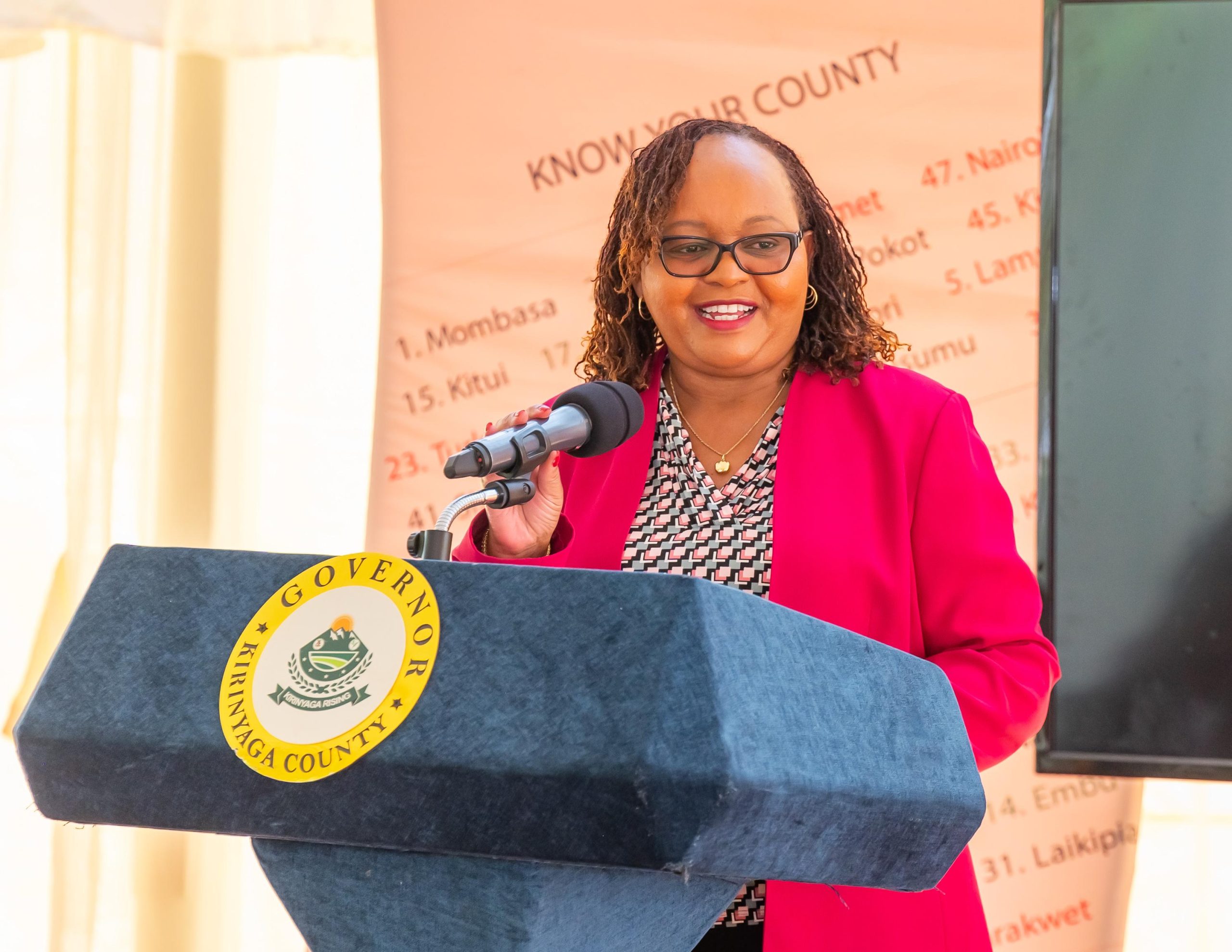
Kirinyaga Governor Anne Waiguru appealed to county governments to protect health gains achieved under devolution by refusing directives she described as unconstitutional from the Ministry of Health.
Waiguru said health is a devolved function and the Ministry must involve counties in any decision that affects service delivery, citing the need for inter‑governmental collaboration.
The remarks were made at the Quarterly Consultative Meeting of County Executive Committee Members for Health in Kirinyaga, where Waiguru highlighted the autonomy of counties and the established mechanisms for working with the national government.
The governor was reacting to a directive from Principal Secretary for Medical Services Ouma Oluga that instructed Social Health Authority compliance officers to remove all payment paybills from government health facilities.
She urged the Ministry to desist from issuing orders that bypass constitutional processes and to follow the communication guidelines that have been used between the two levels of government.
Waiguru stressed that sustaining health investments requires adequate financing, effective coordination and accountability, and called for clear information on fund flows, disbursement procedures and eligibility criteria for facilities.
She warned that vague funding conditionalities could disadvantage some counties and urged a measurable, achievable framework that treats all counties equitably.
Highlighting the broader impact of devolution, Waiguru noted that health facilities have risen from 8,466 in 2013 to 14,710 today, with counties now employing roughly two‑thirds of Kenya’s health workforce and deploying 107,831 community health promoters.
She cited Kirinyaga’s own improvements – bed capacity at the county referral hospital more than doubled and the public facility network expanded from 63 to 76 sites – as evidence of the benefits of devolved health management.
Council of Governors CEO Mary Mwiti backed Waiguru’s stance, arguing that removing hospital paybills would be impractical because many patients still pay cash and the SHA does not cover all services, so paybills must remain operational.


Comments