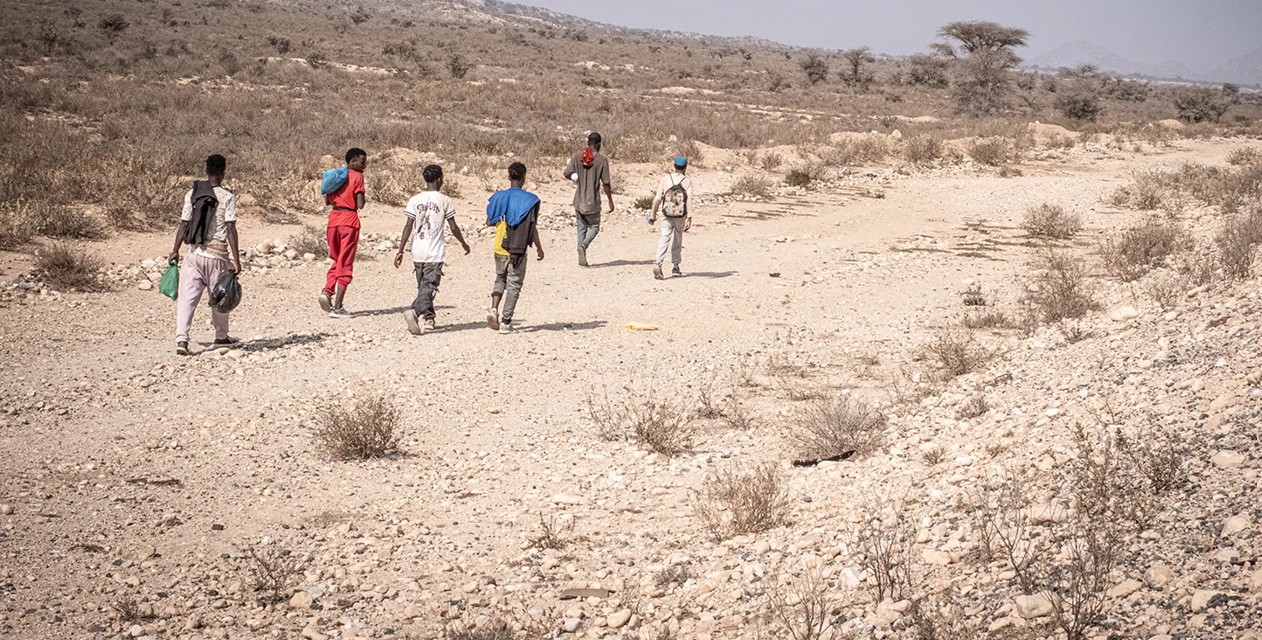
The United States 2026 Trafficking in Persons (TIP) Report says thousands of Ethiopians seeking overseas work are being drawn into human‑trafficking networks through fraudulent job advertisements.
The report cites cases where Ethiopian men were recruited online for purported information‑technology jobs in Thailand, only to be trafficked to online‑scam operations in Myanmar, Cambodia and Laos.
Victims in these schemes are reportedly confined, forced into debt bondage and subjected to physical abuse while being compelled to participate in financial‑fraud activities.
Traffickers are increasingly exploiting digital tools – including big‑data analytics, cryptocurrency, artificial intelligence and the dark web – to recruit, deceive and control victims.
Ethiopia’s high unemployment and poverty drive migration, with the government recording 500,000 registered workers abroad in 2025 and more than 142,000 returning migrants, many of whom are vulnerable to exploitation.
The Middle East remains a major destination for Ethiopian women, who often face severe physical and emotional abuse in domestic‑work settings under employer‑based visa systems.
Ethiopian girls are also trafficked for domestic servitude and sex work in Djibouti and Sudan, while boys encounter forced begging, shop‑keeping and other labour exploitation.
Kenya has featured in regional trafficking routes involving Ethiopian nationals, with periodic arrests of Ethiopians in the custody of suspected traffickers and reports of possible collusion with rogue law‑enforcement officers.
The Ethiopian government identified 164 trafficking victims in the latest reporting period, up from 105 previously, including 37 children forced into labour and 127 adults classified under unspecified forms of trafficking.
Screening of returning migrants flagged 142,679 potential victims; NGOs reported an additional 2,016 cases. Authorities referred 6,640 identified or potential victims to support services, and assistance reached 106,435 people.



Comments