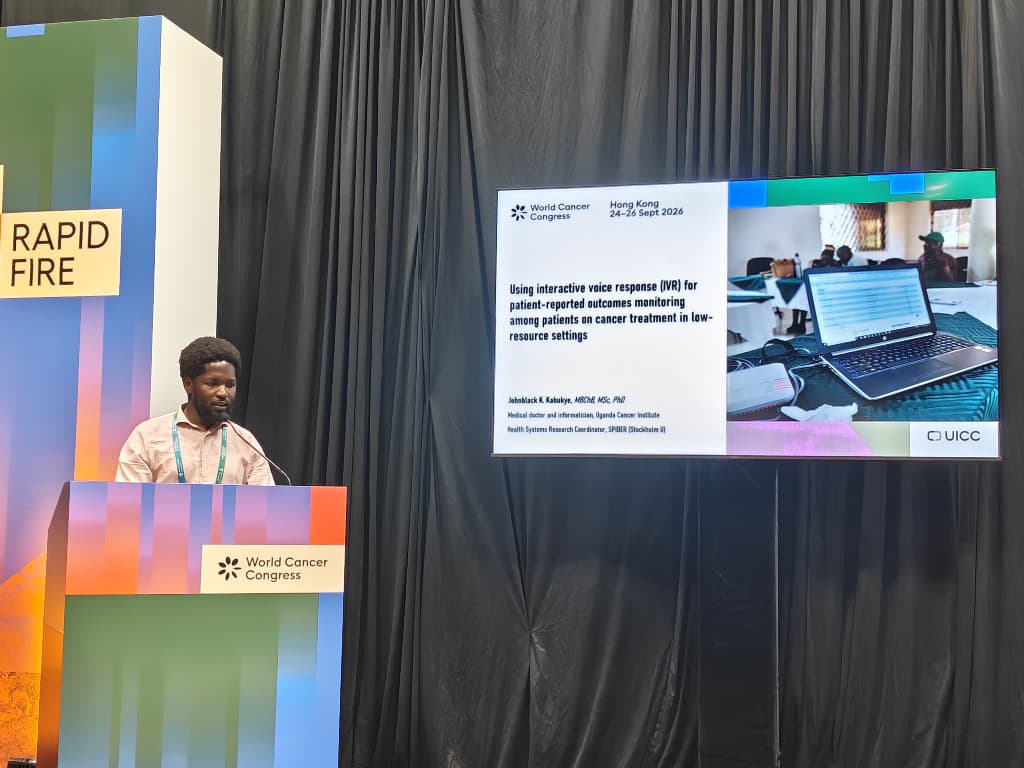
Doctors at the Uganda Cancer Institute (UCI) are testing an automated phone call system that contacts patients at home to record treatment‑related symptoms and trigger alerts for possible complications.
The system asks patients to rate pain, nausea, bleeding and other side effects on a four‑point scale; scores of three or four generate an alert for a healthcare worker to review.
In the pilot, 100 patients were enrolled and 18 instances required readmission before the scheduled follow‑up because the monitoring identified concerning symptoms.
Two of the readmitted patients died during their hospital stay; while the pilot cannot confirm that earlier contact changed outcomes, it underscores the seriousness of inter‑appointment complications.
Dr. Johnblack Kabukye, who helped develop the system, notes that manual follow‑up calls are labour‑intensive and often impractical for resource‑constrained cancer centres.
Key lessons include the need to train patients at enrolment, tailor call timing, language and question wording, and treat unanswered calls as potential warning signs rather than dismiss them.
Data quality can be affected if relatives answer on behalf of patients, so the team plans random manual surveys and other quality‑control checks.
The system currently operates in English and Luganda; expanding to other languages such as Kiswahili would require additional funding for translation and questionnaire development.
Calls are outbound, so patients incur no cost; basic mobile phones suffice, eliminating the need for smartphones or data connections.
Kabukye stresses that the technology does not solve geographic or financial barriers to care, but it can help clinicians decide which patients truly need to travel for a review, potentially avoiding unnecessary journeys.
Future scaling will depend on funding from governments, development agencies, grant‑making bodies and telecom companies willing to sponsor call costs as part of corporate social responsibility.




Comments