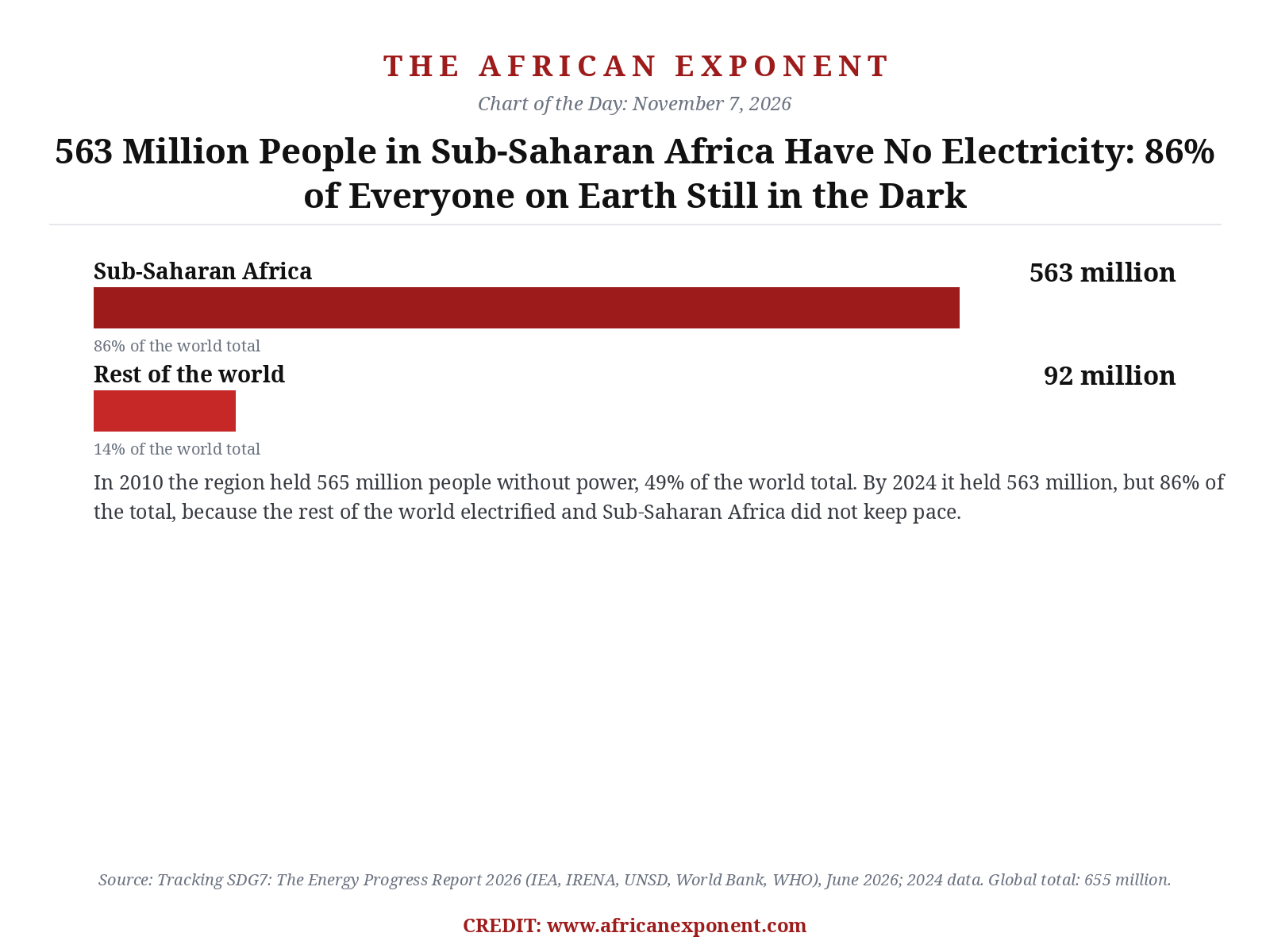
The 2026 Energy Progress Report estimates that 655 million people worldwide live without electricity, of whom 563 million are in Sub‑Saharan Africa, accounting for 86 percent of the global total.
In 2010 the region had 565 million people without power; by 2024 the figure fell by only two million, while its share of the global deficit rose from 49 percent to 86 percent as other regions electrified.
Between 2022 and 2024 the region added an average of 42 million new electricity connections each year, but population growth of about 38 million per year meant net reduction of roughly four million people without power annually.
Rural electrification lagged further, with the deficit rising from 376 million in 2010 to 447 million in 2024.
Three countries—Nigeria, the Democratic Republic of Congo and Ethiopia—together account for about 229 million people without electricity, roughly 35 percent of the global shortfall.
The World Bank and African Development Bank’s Mission 300 initiative aims to connect 300 million more Africans by 2030; it has already delivered over 50 million connections.
Analysts say the current pace must triple to about 1.3 percent of the population per year to achieve universal access by 2030; otherwise roughly 644 million people would remain without electricity, 92 percent of whom would be in Africa.
East Africa, led by Kenya and Rwanda, reduced its electricity deficit by 35 million between 2010 and 2024 through grid expansion and decentralized energy solutions.
Globally, about 800 million people have gained electricity access since 2010, demonstrating that large‑scale interventions can work when deployed effectively.



Comments