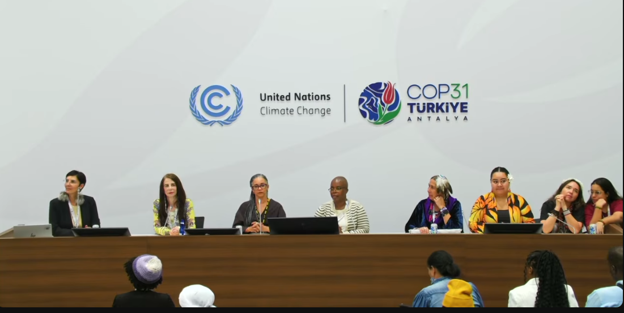
Dr Melania Chiponda of the women‑led ecofeminist group Shine Collab told delegates at the 31st United Nations Climate Change Conference (COP31) that Africa must ensure the global clean‑energy shift does not recreate colonial, patriarchal and extractive systems that have historically left the continent impoverished.
She stressed that merely mentioning Africa and indigenous peoples in climate policy preambles is insufficient without concrete financing, reliable electricity access and genuine decision‑making power for local communities.
Chiponda highlighted the growing demand for transition minerals such as lithium, warning that African states risk becoming “sacrifice zones” that supply raw materials to industrialised economies while their own populations remain energy‑poor.
Using Zimbabwe as an example, she noted that despite substantial lithium reserves, urban electrification sits at about 66 % and rural coverage at roughly 20 %, leaving communities near mineral deposits without reliable power.
She cited the indigenous Tonga people, whose lands host major lithium deposits yet suffer severe energy poverty, lacking electricity, affordable batteries and relying on polluting fuels.
Chiponda linked this pattern to historic extraction of coal, copper and other minerals, arguing that the current scramble for transition minerals could perpetuate similar inequities under the guise of climate action.
She called for a shift away from extractive, patriarchal and colonial structures, asserting that a just transition must transform the economic and political systems that determine resource control and benefit distribution.
Shine Collab urges governments, climate financiers and private‑sector actors to move beyond symbolic commitments and deliver a feminist, decolonial and community‑centred energy transition that guarantees affordable energy, resource ownership and meaningful participation for women and marginalised groups.



Comments