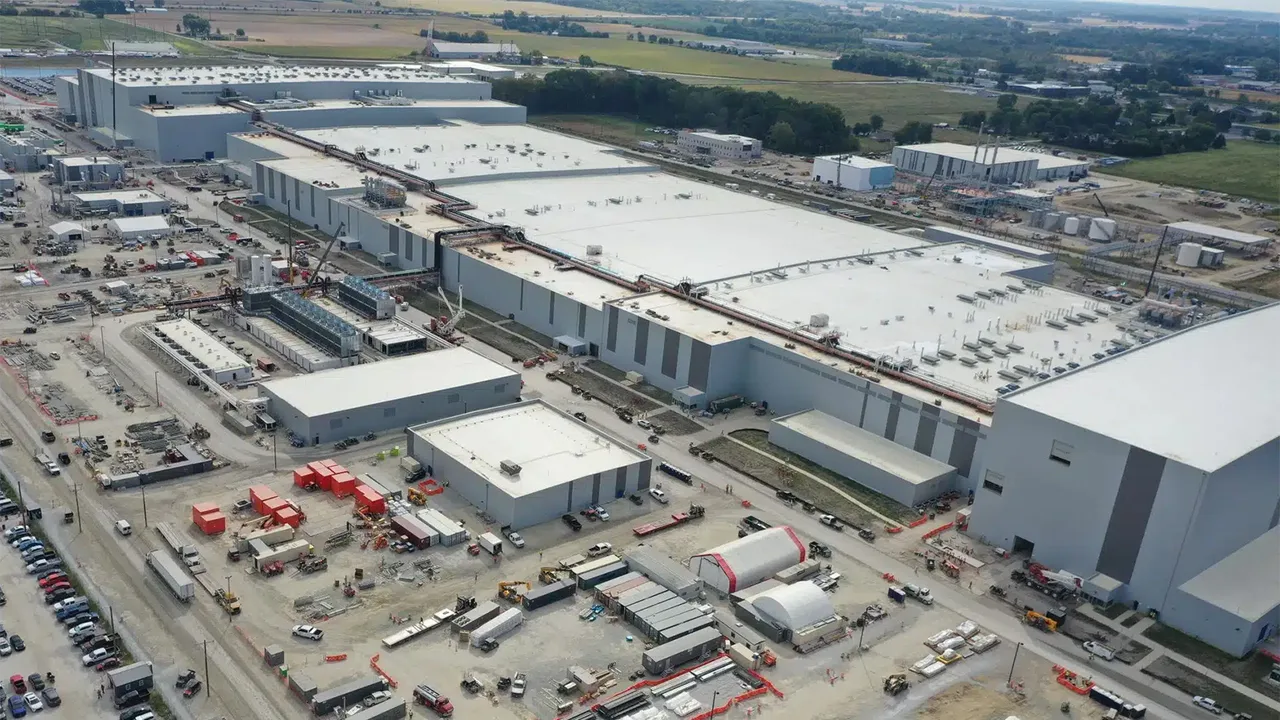
Samsung SDI announced that its StarPlus Energy complex in Kokomo, Indiana, has entered mass production of prismatic lithium‑iron‑phosphate (LFP) cells, following the start of output in October.
The Indiana site now serves as Samsung SDI’s dedicated energy‑storage system (ESS) battery production hub, supporting both LFP and nickel‑cobalt‑aluminum (NCA) chemistries under a two‑track strategy.
The complex comprises two gigafactories built with Stellantis in a joint venture, together representing an investment of more than $6.3 billion and a combined capacity of 67 GWh.
The first plant, with a 33 GWh capacity, began operations in early 2025, while the second 34 GWh unit is slated to start production in early 2027 and will add roughly 1,400 jobs.
Samsung SDI’s shift toward stationary‑storage LFP cells reflects weak U.S. electric‑vehicle sales, prompting the company and rivals such as LG Energy Solutions to repurpose mobility‑cell lines for grid‑scale applications.
To secure a supply chain independent of Chinese imports and comply with U.S. Foreign Entity of Concern rules, Samsung SDI signed long‑term agreements with major Korean firms for LFP cathode materials.
The company has already booked more than 60 GWh of U.S. ESS orders for 2026, including a 1 GWh contract with Alpha Omega Power for its NCA‑based Battery Box 1.7 and a cell supply deal with inverter maker Sungrow.
Data‑center backup power and utility‑scale storage projects are driving the recent profit surge, with Samsung SDI reporting its strongest operating profit in three years and a 52.6 % year‑on‑year revenue increase in Q3 2026.


Comments