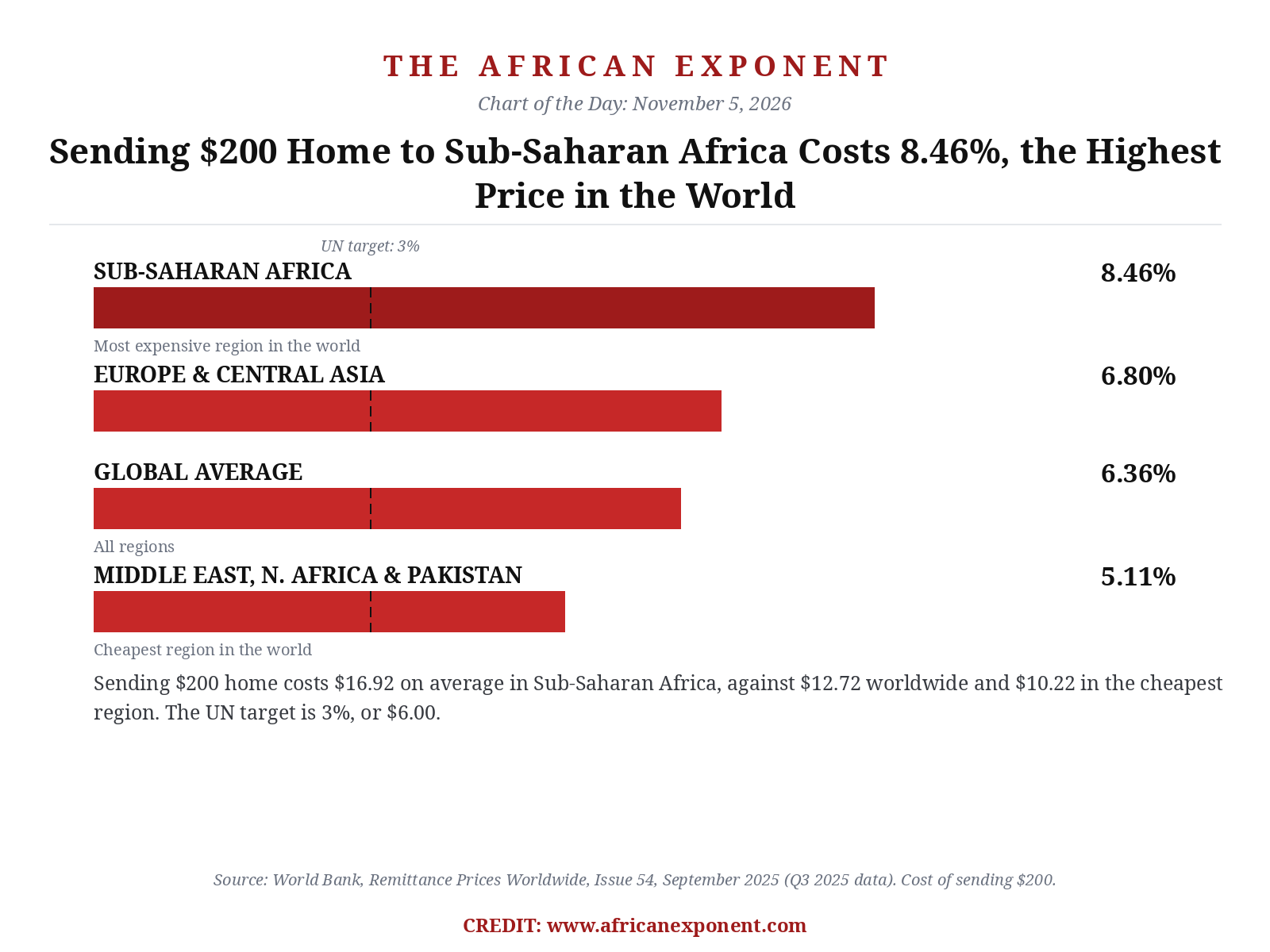
The World Bank’s Remittance Prices Worldwide data for the third quarter of 2025 shows that sending $200 to Sub‑Saharan Africa costs an average of 8.46%, the highest among all regions.
At that rate, senders lose $16.92 per $200 transfer to fees and exchange‑rate margins, compared with a global average loss of $12.72 (6.36%).
The cost is about one‑third higher than the cheapest region – the Middle East, North Africa and Pakistan – where the average charge is 5.11% ($10.22).
Bank transfers remain the priciest channel worldwide, averaging 14.99% (nearly $30 on a $200 transfer), while digital services average 4.59%.
Nine of the 13 global corridors where sending $200 costs more than 20% originate in Sub‑Saharan Africa, highlighting the region’s concentration of the most expensive routes.
Remittances are a major source of income for the continent; the diaspora sent roughly $95 billion home in 2024, exceeding that year’s foreign direct investment.
Each percentage point of cost translates into billions of dollars lost annually, reducing funds available for school fees, medical bills and rent.
Although the average cost fell from 8.78% in early 2025 to 8.46% by the third quarter, the UN Sustainable Development Goal 10.c target of below 3% by 2030 remains far out of reach.
The World Bank’s SmaRT index, which tracks the three cheapest providers per corridor, recorded a global average of 3.29% in the same period, indicating that lower‑cost options exist where competition is present.
However, 20 corridors worldwide lack any SmaRT‑qualified service, underscoring that limited access, rather than absence of cheaper providers, drives high costs in many African corridors.




Comments