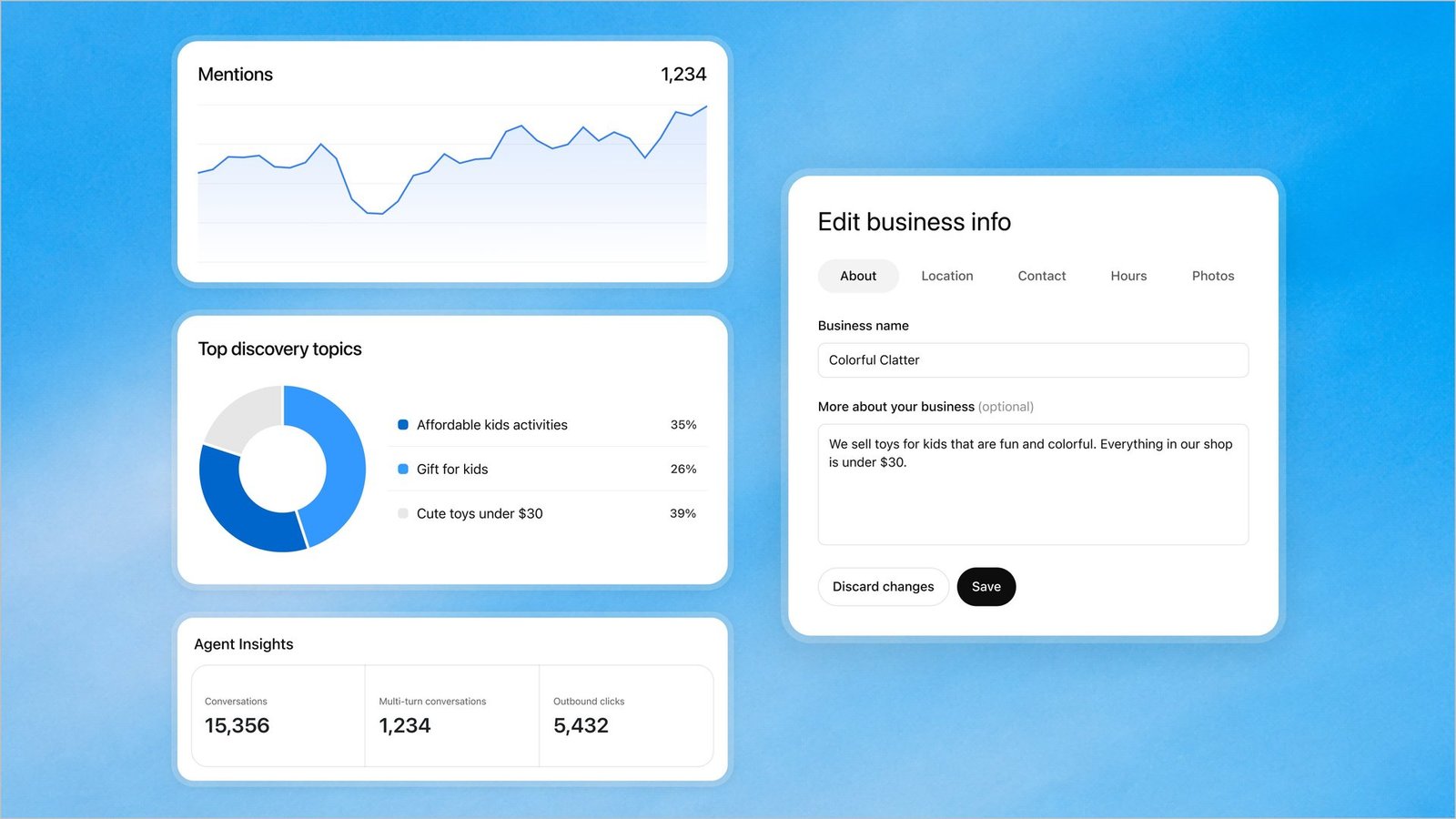
OpenAI opened the Business Hub beta on 10 November 2026, allowing businesses to claim a profile that appears when users ask ChatGPT for recommendations.
Claiming a profile is done through the Business Hub tab in the ChatGPT sidebar, where owners search for their business name, select the correct listing and verify ownership via a phone code, email code, DNS TXT record or Shopify login.
The Hub also displays basic analytics for the past 28 days, including the number of times ChatGPT mentions the business’s website, clicks on the profile and the “discovery topics” that triggered the mention.
Business Agents – AI chatbots that can answer product‑specific questions – are currently limited to eligible online shops and service businesses in the United States and cannot be created by Kenyan firms at this stage.
OpenAI states that any eligible business in a country where ChatGPT is available can claim a profile; ChatGPT is accessible in Kenya, but verification methods must be supported locally, and the guide does not list Kenya explicitly.
Physical stores and restaurants in Kenya can only claim an existing US listing, meaning a Nairobi restaurant or a phone shop on Moi Avenue cannot yet create a local profile.
Kenyan online retailers or service providers with their own website have the best chance of successfully claiming a profile, though they still cannot launch a Business Agent.
Businesses in Kenya can already purchase self‑service ChatGPT Ads, which are available in 89 countries as of 21 Oct 2026, but ads are shown only to users on the Free or Go plans.
OpenAI does not disclose pricing for Business Agents nor guarantee that claiming a profile or uploading a feed will increase recommendation frequency; the platform notes that a feed does not ensure higher visibility.
If a business already has a listing in ChatGPT, it remains visible whether or not the owner claims it; claiming primarily enables owners to correct inaccurate details.


Comments