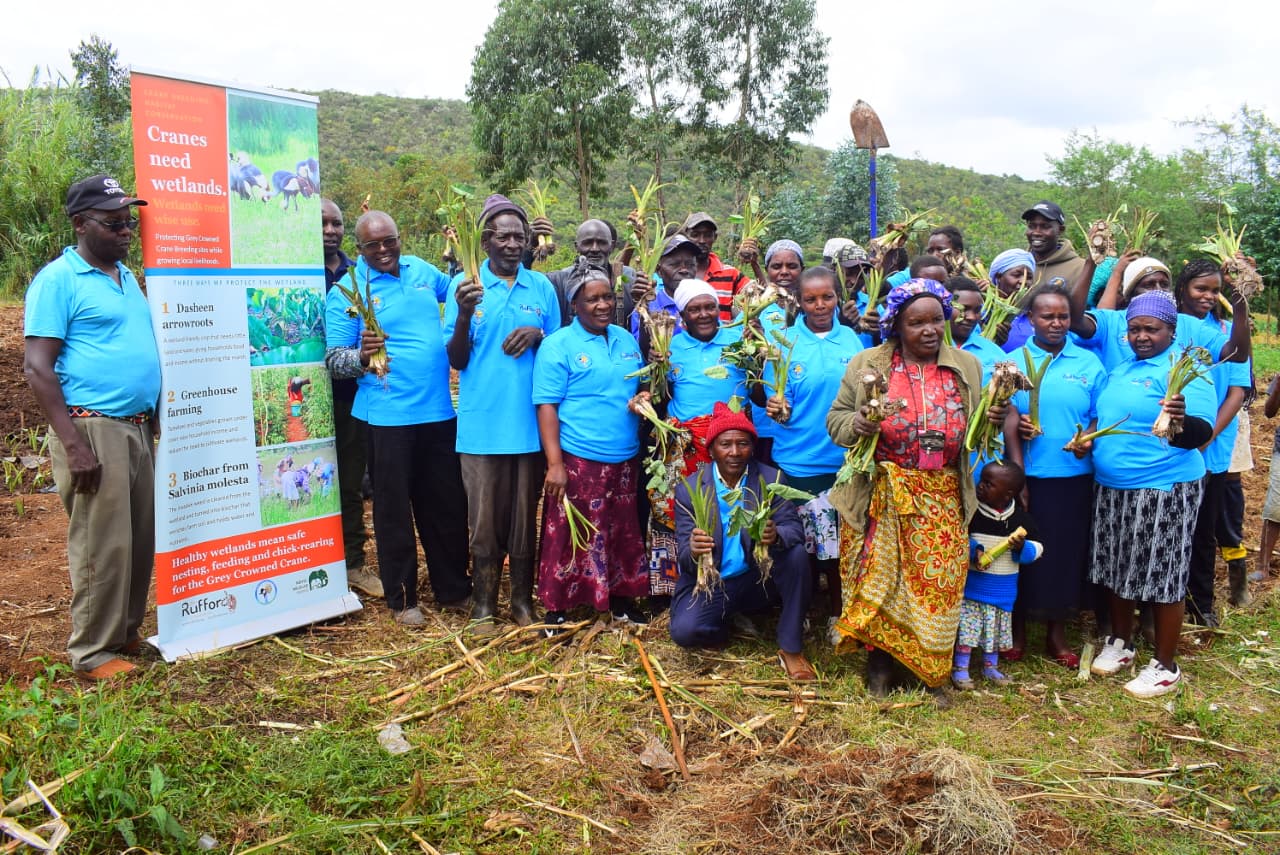
The Dasheen arrowroot variety is being promoted as a higher‑yielding, less water‑intensive crop that can be cultivated on upland farms, helping to preserve wetlands and restore wildlife habitats.
For decades, farmers in wetland areas have grown indigenous arrowroots that depend on constant water supplies, a practice that has contributed to wetland degradation and threatened species such as the endangered Grey Crowned Crane.
David Warui of Cranes Conservation Volunteers says moving arrowroot production away from wetlands is essential for reversing environmental damage while improving farmer livelihoods.
An initiative backed by the UK‑based Rufford Foundation and Cranes Conservation Volunteers supplies technical assistance and farming equipment to Nyandarua growers, encouraging upland cultivation of the Dasheen variety.
Unlike the indigenous variety, which requires marshy conditions and takes nine to thirteen months to mature, Dasheen adapts to upland and moderately wet soils and can be harvested in five to eight months.
Early adopters report better yields, the possibility of multiple harvests per year and increased incomes, while noting that previously degraded wetlands are beginning to recover.
Farmers such as Judy Wambui say the new variety challenges the belief that arrowroots can only grow in marshy environments, opening up more sustainable options near homes.
The shift also raises awareness of past ecological impacts, with growers like Paul Murage acknowledging that earlier wetland clearing displaced aquatic life.
Stakeholders view the transition to climate‑smart upland arrowroot farming as a practical pathway to balance food production, economic empowerment and ecosystem conservation amid climate pressures.




Comments