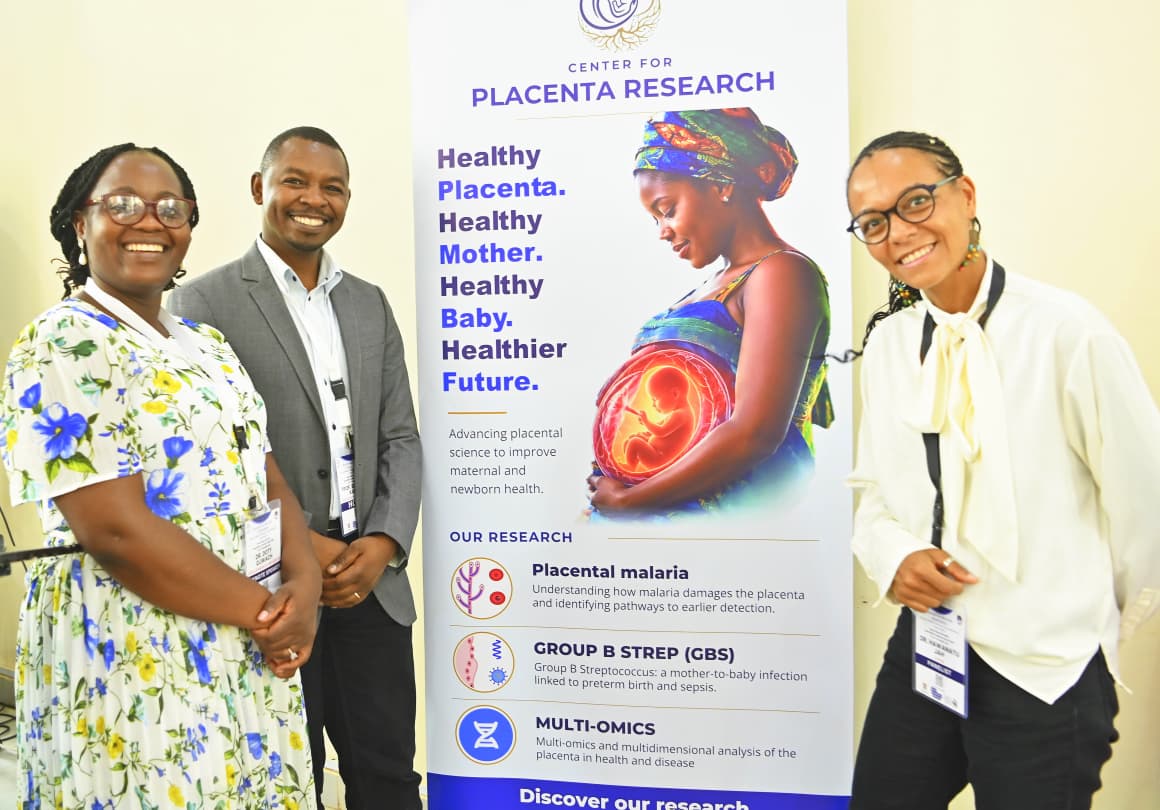
The Placental Health Symposium 2026 took place on November 5‑6 at the Mwai Kibaki Convention Centre, bringing together researchers and clinicians from more than a dozen institutions across Africa, Europe and Australia.
Mount Kenya University organised the event in partnership with the London School of Hygiene & Tropical Medicine, Germany’s Max Delbrück Center and the University of Cambridge.
Opening remarks were delivered by MKU physician‑scientist Professor Jesse Gitaka, who highlighted the placenta as the first organ of a newborn and warned that infections such as malaria, HIV, cytomegalovirus, Group B Strep and anaemia can compromise its function.
Professor Gitaka, director of MKU’s Centre for Malaria Elimination and Centre for Research in Infectious Diseases, noted that his placental malaria programme in Bungoma County began in 2018 and that he received a Wellcome Discovery Award in 2025 to study molecular pathways of placental malaria.
MKU launched its Centre for Placenta Research in July 2026 to link laboratory findings with clinical practice, especially in high‑burden settings.
University of Nairobi clinician‑scientist Professor Moses Obimbo Madadi presented data on HIV‑malaria co‑infection, showing placental inflammation, reduced oxygen supply and increased preterm‑birth risk, and described microscopy findings of syncytial knotting and fibrin deposits in placentas from women on antiretroviral therapy.
Dr Mary Maina, an obstetrician‑gynaecologist from Kiambu County, urged health providers to customise antenatal care, conduct early risk assessments and document placentas after adverse outcomes, recommending training for clinicians and specialist placental assessment centres at regional referral hospitals.
Visiting scientist Dr Hawanatu Jah highlighted the shift to a ‘test‑and‑treat’ HIV approach and warned of emerging challenges as children exposed to HIV and antiretrovirals become parents, referencing the PRECISE cohort that follows over 8,000 women and 6,000 children across Kenya, The Gambia and Mozambique.
Senior research fellow Dr Ricardo Ataide discussed evidence that iron deficiency may protect against placental malaria, noting debates sparked by iron supplementation trials such as the Pemba study and the role of intermittent preventive treatment in pregnancy.
The two‑day programme concluded with a session to shape a shared African research agenda for placental health, while MKU Vice‑Chancellor Professor Deogratius Jaganyi pledged continued investment in health‑professional training and announced collaborations that have already placed over 100 Kenyan trainees in paid apprenticeships in Germany.



Comments