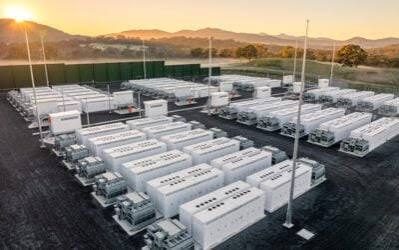
Lydian Energy placed its 150 MW/600 MWh Faraday battery energy storage system (BESS) into commercial operation in Utah County on 18 September 2026, adding four hours of contracted electricity storage to the grid that serves Meta’s Eagle Mountain data centre.
The battery occupies roughly eight acres adjacent to Lydian’s existing 525 MW Faraday solar plant and shares the solar facility’s substation and grid interconnection, avoiding the need for a separate connection.
Built with lithium‑iron‑phosphate (LFP) technology, the BESS can discharge at up to 150 MW for four hours, delivering a total of 600 MWh of stored energy.
Lydian reported that the construction and commissioning phase lasted about ten months from mobilisation to commercial operation, a timeline that follows earlier development work dating back to 2023.
The battery’s capacity is contracted to PacifiCorp under a long‑term Schedule 34 energy storage agreement, meaning the utility, not Meta, holds the formal off‑take of the storage service.
Meta publicly acknowledged the Faraday battery as part of its Utah energy investments, noting that its data centre portfolio now includes more than 1.7 GW of clean generation and 600 MWh of battery storage across 13 sites.
Lydian is planning a second phase, Faraday BESS 2, which could add up to 375 MW of power and 1,500 MWh of storage, with a target commercial‑operation window in the fourth quarter of 2028.
The company estimates the Faraday BESS will generate about $9 million in property‑tax payments over its operational life, though it has not disclosed the annual breakdown or the specific taxing authorities involved.
Construction faced a wildfire threat in June 2026; Lydian’s chief operating officer said safety was prioritised while work continued, though no further details on impact were released.



Comments