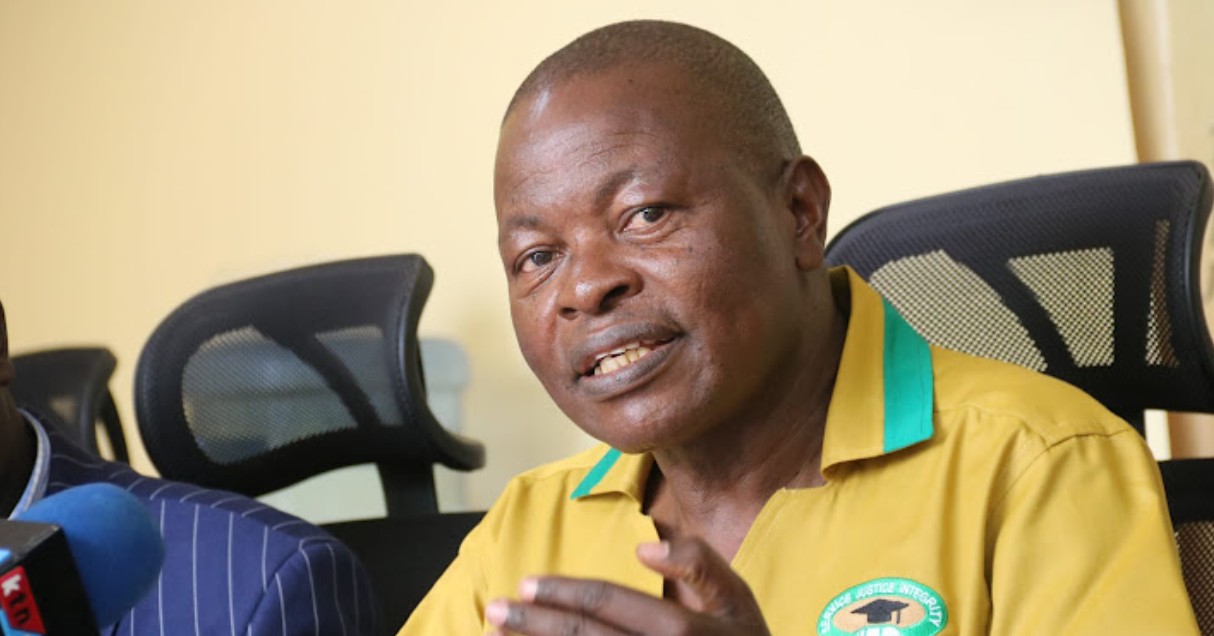
The Kenya Union of Post‑Primary Education Teachers (KUPPET) has renewed its demand that junior schools – grades 7, 8 and 9 – be managed independently of primary schools, even when they share the same compound.
President William Ruto’s recent plan to place all basic education levels under a single administration was described by the union as a “fallacy”, arguing that it does not address the core challenges facing learning institutions.
KUPPET Secretary General Akelo Misori warned that assigning junior schools to primary school headteachers creates a mismatch between the secondary‑level curriculum and the leadership responsible for its delivery.
The union points to Schedule Four of the Constitution, which outlines distinct categories of schools – pre‑primary, primary, secondary, tertiary and universities – and argues that the proposed combined governance model lacks constitutional basis.
Misori added that implementing the comprehensive model without a constitutional amendment would amount to “trial and error”, underscoring the legal concerns surrounding the proposal.
He also noted that Teachers Service Commission appointment letters identify junior school educators as post‑primary teachers, reinforcing KUPPET’s claim for separate representation and administration.
KUPPET cites Kenyatta University Primary School as an example where different learning institutions coexist on the same campus yet retain separate management structures.
The union stresses that shared physical facilities – such as classrooms and staffrooms – do not necessitate shared governance, noting that junior schools already operate with distinct spaces within primary compounds.
The current dispute follows a long‑standing disagreement with the Kenya National Union of Teachers (KNUT) over the management and representation of junior school teachers since the introduction of Competency‑Based Education nearly a decade ago.



Comments