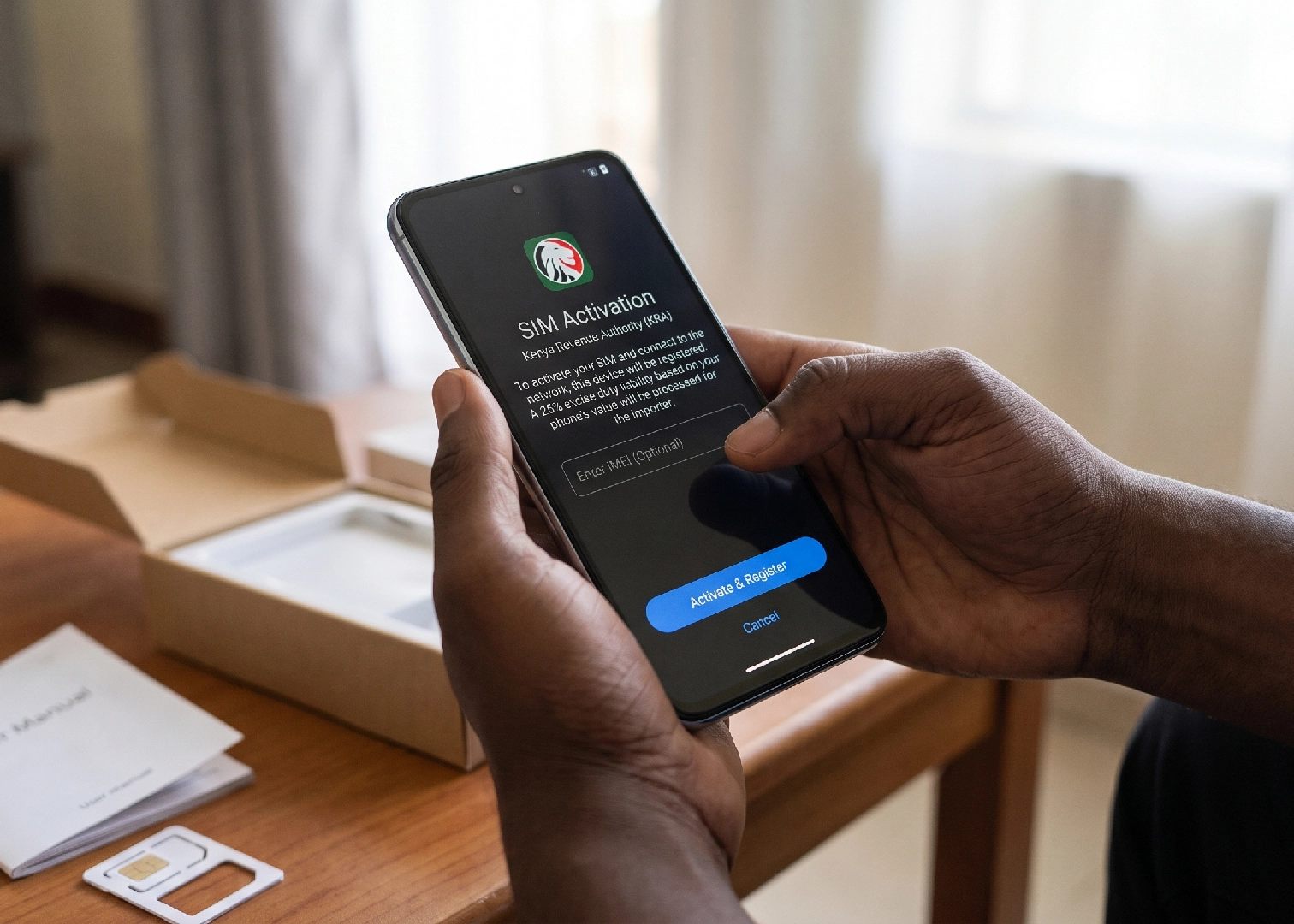
KRA Board Chairperson Ndiritu Muriithi defended a 25% activation tax for mobile phones during a media engagement in Laikipa, saying it would curb under‑declaration in consolidated cargo shipments.
The tax was included in the Finance Bill 2026 but the Finance and National Planning Committee recommended its removal, and it was subsequently omitted from the Finance Act 2026.
Consequently, the existing 10% excise duty on mobile phones continues unchanged.
Under the withdrawn proposal, importers and licensed manufacturers would have become liable for a 25% duty when a device was first activated on a Kenyan network, using mobile‑network records to match phones with import declarations.
The bill did not define “activation,” leaving ambiguity over whether switching on a phone, inserting a SIM, or first network connection would trigger the tax.
KRA argues that some importers exploit consolidated cargo arrangements to under‑declare phones, citing a Business Daily investigation that uncovered 55,607 basic smartphones and 309 high‑end phones undeclared in a single shipment, resulting in an estimated KES 56 million tax shortfall.
The authority believes an activation‑based checkpoint would give the taxman a second verification point, easing cash‑flow for honest importers while targeting those hiding phones in shared shipments.
If implemented, the liability would fall on the business at activation, but the cost would likely be passed to retailers and ultimately to consumers, with second‑hand buyers and low‑income households facing the greatest price impact.
An activation system would require matching device identifiers such as IMEI numbers with import records, raising privacy concerns after the High Court quashed mandatory IMEI disclosure directives in 2025.
KRA has already issued an October 2026 notice obliging importers, customs agents and consolidators to disclose individual importer details and shipment values, aiming to address the under‑declaration problem without moving the tax to activation.




Comments