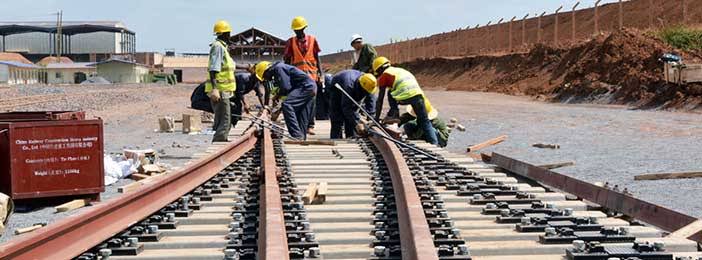
The National Treasury has raised the budget for the Naivasha–Kisumu–Malaba SGR extension to about KSh651 billion, an increase of roughly KSh148 billion from the earlier KSh502.9 billion estimate.
The extension spans 369 km, divided into Phase 2B – 264 km from Naivasha to Kisumu – and Phase 2C – 107 km from Kisumu to the Malaba border, plus an 8.69‑km branch to the proposed Kisumu Port on Lake Victoria.
Implementation is led by Kenya Railways Corporation under the Ministry of Roads and Transport, with China Communications Construction Company (CCCC) and China Road and Bridge Corporation (CRBC) appointed as the main contractors.
President William Ruto officially launched the project in March 2026, and construction on the Naivasha–Kisumu section began in July 2026, with the first rail and sleepers placed in Narok on 1 July.
Financing approach and private‑sector participation
External financiers are expected to provide KSh618.8 billion of the revised budget, while the government is studying securitisation of future Railway Development Levy (RDL) collections to raise additional funds.
The Treasury has indicated the possibility of issuing up to KSh390 billion in bonds backed by future RDL revenue, separating infrastructure construction from rolling‑stock procurement.
Roads and Transport Cabinet Secretary Davis Chirchir has outlined plans for private‑sector involvement mainly in supplying locomotives, passenger coaches and freight wagons, with investors expected to recover costs through railway operations and freight charges.
Expected benefits for western Kenya and regional trade
When operational, the Kisumu SGR segment will provide rail freight and passenger services to western Kenya, offering an alternative to road transport for suitable cargo and travelers.
The 8.69‑km branch to Kisumu Port could enable intermodal transfers between rail and lake transport, subject to the development of port facilities and compatible cargo‑handling systems.
At the national level, the extension aims to shift freight from the congested Northern Corridor highways to rail, improving logistics efficiency and supporting trade with Uganda and other East African markets.
Land acquisition, environmental safeguards and project timeline
The National Land Commission is coordinating acquisition of more than 5,000 acres along the corridor, identifying affected properties and arranging compensation in accordance with Kenyan law.
Project delivery also requires completion of environmental and social impact assessments, resettlement planning and other safeguards to manage effects on communities and the environment.



Comments