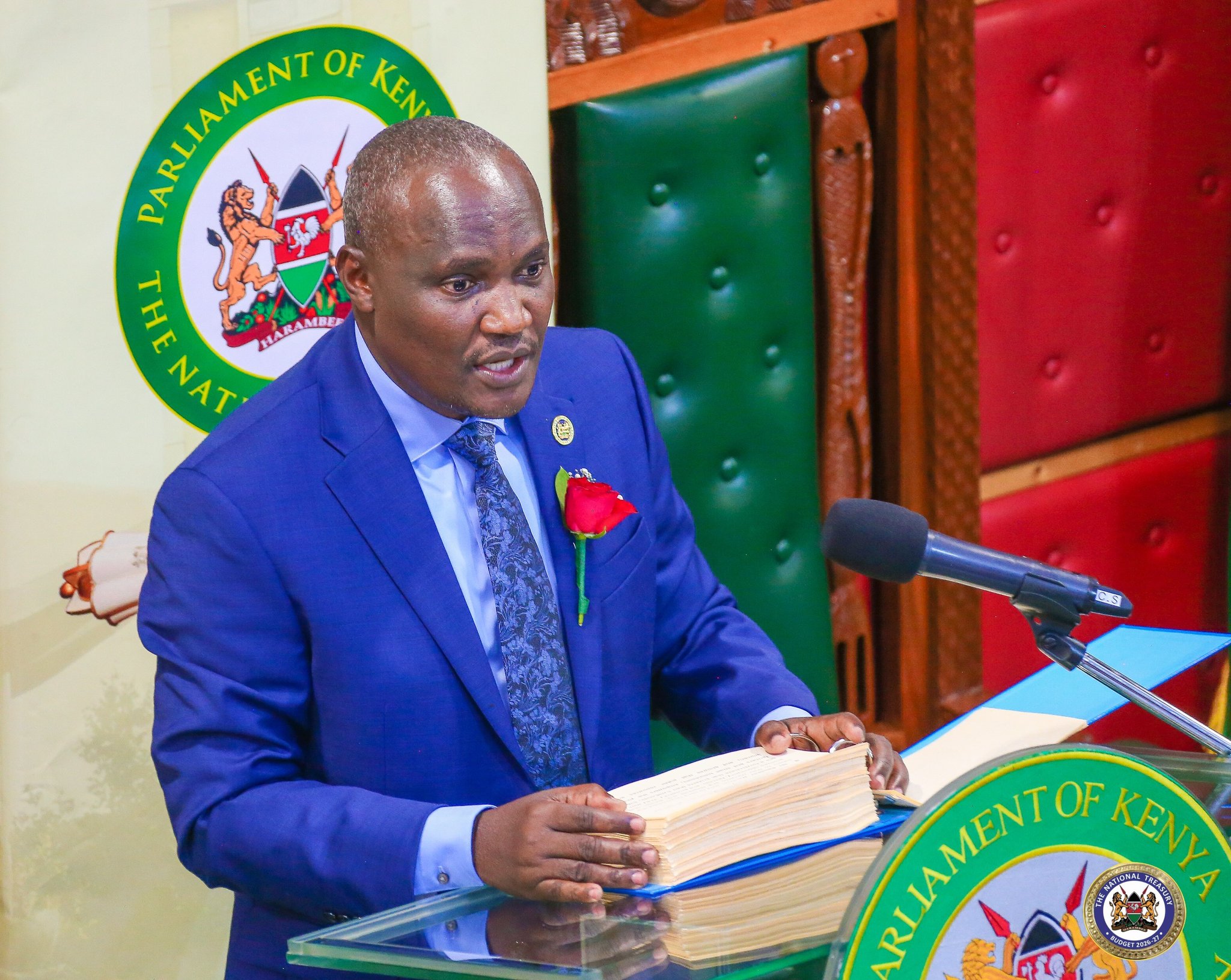
The National Treasury’s October 2026 Draft Budget Policy Statement estimates total expenditure and net lending at roughly Sh5.416 trillion, against projected revenue of Sh4.004 trillion.
Development allocation is set at about Sh915.8 billion, a reduction that reflects the government’s plan to channel major infrastructure projects through the National Infrastructure Fund and public‑private partnerships rather than the conventional budget.
The fiscal deficit is projected at Sh1.353 trillion, equivalent to 5.9% of GDP, to be financed mainly by domestic borrowing of Sh929.1 billion and external borrowing of Sh423.8 billion.
Domestic borrowing will dominate financing, with the Treasury planning monthly issuances averaging Sh110 billion between August and January, double the average in other periods.
The Treasury is also exploring external commercial financing options, including Eurobonds, Samurai and Panda bonds, and currency swaps, to diversify funding sources.
Revenue mobilisation remains a challenge; the Medium‑Term Revenue Strategy targets 20% of GDP by June 2026 and 25% by June 2030, yet current collections sit at about 14.3% of GDP.
Officials warn that heavy domestic borrowing could strain the banking sector’s ability to extend credit, as banks allocate more resources to Treasury securities, potentially undermining monetary policy transmission.
The IMF is unlikely to launch a new lending programme before the August 2027 elections, but a precautionary standby arrangement is being considered to bolster investor confidence and support fiscal consolidation.



Comments