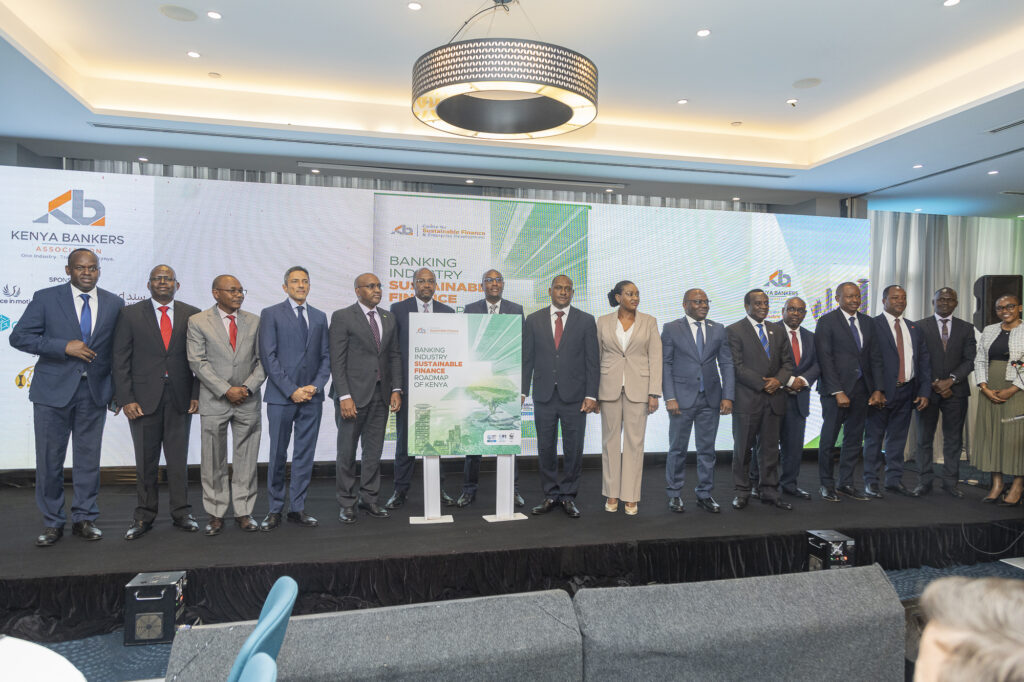
The Kenya Bankers Association (KBA) launched its Banking Industry Sustainable Finance Roadmap at the Sustainable Finance Summit 2026 in Nairobi, outlining a ten‑year plan that puts sustainability information at the core of lending, risk management and capital allocation.
A key thrust of the roadmap is the need for stronger ESG reporting systems and more consistent climate and nature data, which banks must integrate into their decision‑making processes.
To address data gaps, the plan proposes a pilot sustainable‑finance tracker in 2028, annual public reporting from that year and an interoperable reporting infrastructure by 2029.
The roadmap also calls for banks to integrate priority climate and nature datasets into financial risk analysis by 2030, using tools such as carbon registries and nature‑related assessments aligned with the Taskforce on Nature‑related Financial Disclosures.
KBA’s own study, cited in the framework, found that all commercial banks have adopted sustainable‑finance guiding principles and that 83% use KBA‑developed disclosure templates aligned with the TCFD, while 73% comply with the Central Bank of Kenya’s climate‑risk guidelines.
Despite these advances, the roadmap notes that climate‑aligned lending remains a small share of bank portfolios and that information on sustainable‑finance volumes, pricing and performance is limited, underscoring the need for better monitoring.
Technology providers are expected to play a role, with platforms like Ardena Consulting’s solution highlighted for consolidating sustainability data across finance, HR, procurement and utilities, and providing audit trails for reported figures.
KBA Chairman and KCB Group CEO Paul Russo said the roadmap will guide banks in directing capital toward green projects while improving management of climate and nature‑related financial risks.
Implementation will be staged in three phases: foundation (2027‑2032), scale‑up (2032‑2035) and consolidation (2035‑2037), with milestones such as establishing an MSME financing gap baseline by 2028 and integrating climate datasets by 2030.
International partners, including the International Finance Corporation and WWF‑Kenya, are supporting the roadmap, and the IFC’s regional director for Eastern Africa pledged assistance for its rollout.




Comments