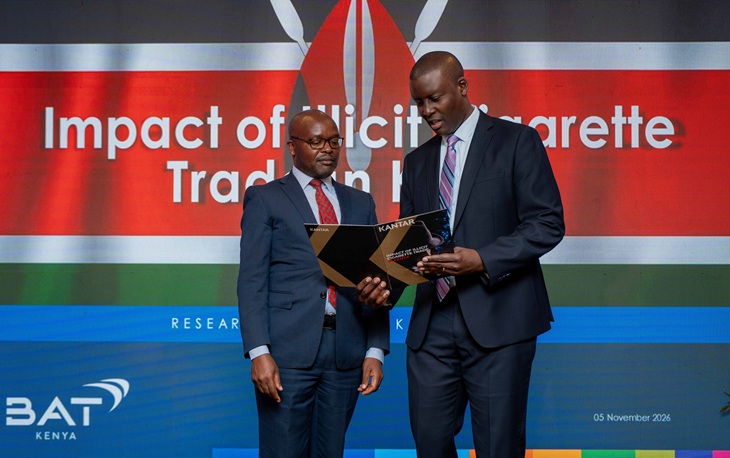
A Kantar study commissioned by BAT Kenya estimates that Kenya lost about KSh 47 billion in excise duty and VAT from illicit cigarettes over the 2021‑2025 period.
The research puts the share of illicit cigarettes at 45.1 % of total consumption in 2025, meaning roughly one in two cigarettes sold were untaxed and non‑compliant with regulations.
Illicit cigarettes are defined in the study as products on which applicable taxes have not been paid and that fail to meet other regulatory requirements.
The report links a 55 % rise in cigarette excise rates between 2018 and 2022 to a KSh 1 billion drop in excise revenue from the legal market during the same period.
Beyond tax losses, the study notes that employment in the legal tobacco value chain fell by 4,700 jobs between 2022 and 2025, and the sector’s contribution to GDP fell by KSh 37.7 billion.
BAT Kenya’s managing director, Sidney Wafula, warned that the surge in illicit trade places pressure on the government to raise taxes or borrow more to fund essential services, and exposes consumers to unregulated products.
Wafula also cautioned that if the trend continues, Kenya could follow South Africa’s experience, where illicit cigarettes account for about three‑quarters of the market and have led to factory closures and job losses.
BAT Kenya calls for stronger enforcement, improved border controls, and a more robust track‑and‑trace system to curb the illicit supply chain, and welcomes ongoing government enforcement actions.




Comments