The IEBC informed the National Assembly Justice and Legal Affairs Committee that it faces an Sh11.02 billion shortfall covering both election‑specific activities and routine operations.
Deputy Commission CEO Obadia Keitany, speaking for acting CEO Ruth Kulundu, said Sh3.51 billion is required for core election tasks while a further Sh7.52 billion is needed for normal commission functions.
Unfunded items include Sh471.21 million for transporting strategic materials and ballot papers, an extra Sh1.6 billion to pay more than 600,000 temporary officials beyond the Sh10.4 billion already budgeted, and Sh198.83 million for media campaigns.
For its ordinary operations, the commission cites a Sh3.41 billion gap for voter education and public communication, plus Sh1.8 billion for renovations, furniture, computers, fuel and vehicle maintenance, and Sh1.1 billion for continuous voter registration.
Additional requests cover Sh172.8 million for county‑level partnership meetings and capacity‑building, and Sh547.92 million to purchase new vehicles for election logistics.
The commission plans to increase polling stations from 46,229 in 2022 to 55,393 to serve an anticipated 28.5 million registered voters in 2027.
The House Committee on Constitutional Implementation Oversight urged the National Treasury to address the funding deficit and provide a clear schedule for releasing the required funds to avoid delays in election preparations.
Technology needs drive budget increase
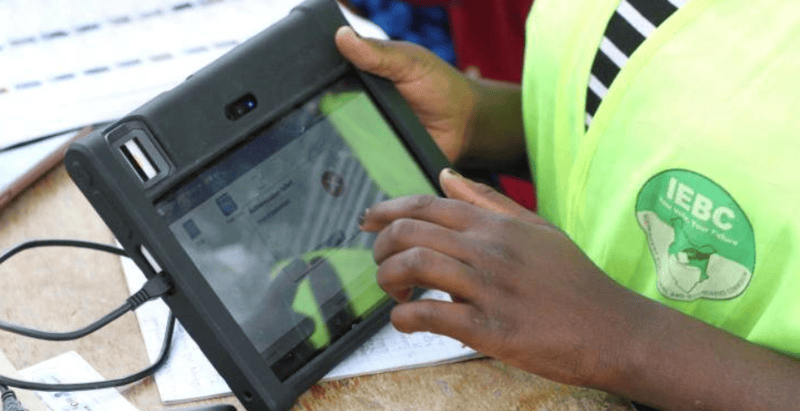
IEBC estimates that at least Sh10.7 billion is needed to acquire 60,000 new Kenya Integrated Election Management System (KIEMS) kits and replace ageing equipment, after an audit raised concerns about the suitability of kits bought for the 2022 election.
The commission originally planned to purchase 45,000 new kits and reuse 15,000 from 2021, but the audit’s recommendation to avoid reliance on internal ICT assessments prompted the request for the larger quantity.


Comments