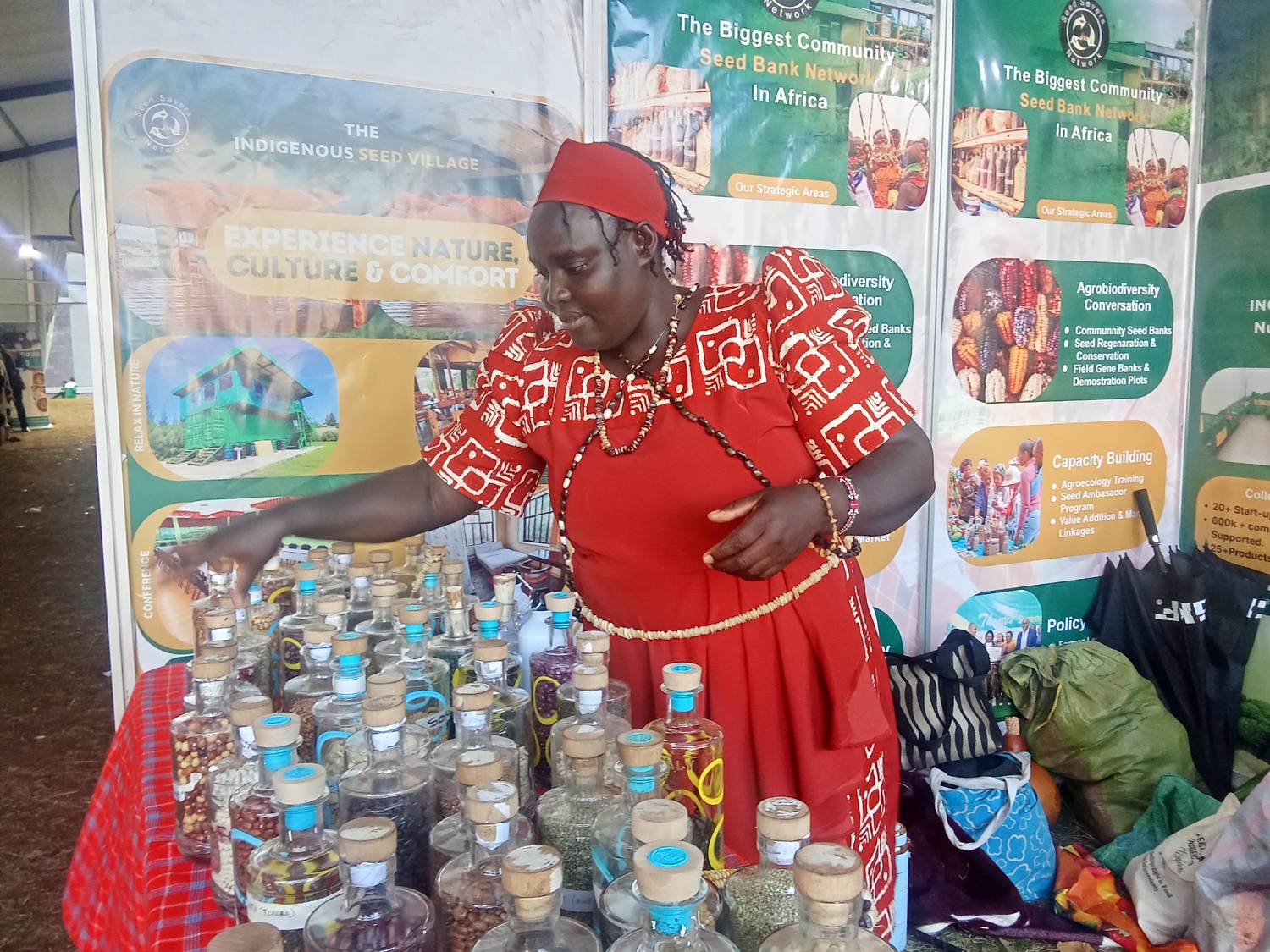
Martha Njenga, an agroecology farmer from Gilgil in Nakuru County, launched a community seed‑saving scheme after observing small‑scale farmers struggle to afford quality seeds at the start of the rainy season.
The bank uses a loan‑return model: members can borrow, for example, 10 kg of seed and are asked to return 13 kg after harvest, creating a surplus for future borrowers.
Njenga has preserved 15 varieties of maize and more than 60 varieties of beans, seeds she inherited from her grandmother.
Members rely on the bank to obtain seeds when cash is scarce, avoiding delays that could push planting beyond the optimal window and threaten yields.
The group of about 150 members also shares agroecological practices, using organic manure, livestock waste and locally available plants such as tithonia, onions and garlic to manage soil fertility and pests without synthetic chemicals.
Regular visits to each other’s farms and seed‑germination testing help maintain seed viability and encourage peer learning among members.
Njenga stresses that preserving indigenous seeds safeguards food security, as the crops grown from these seeds eventually reach households’ kitchens and plates.


Comments