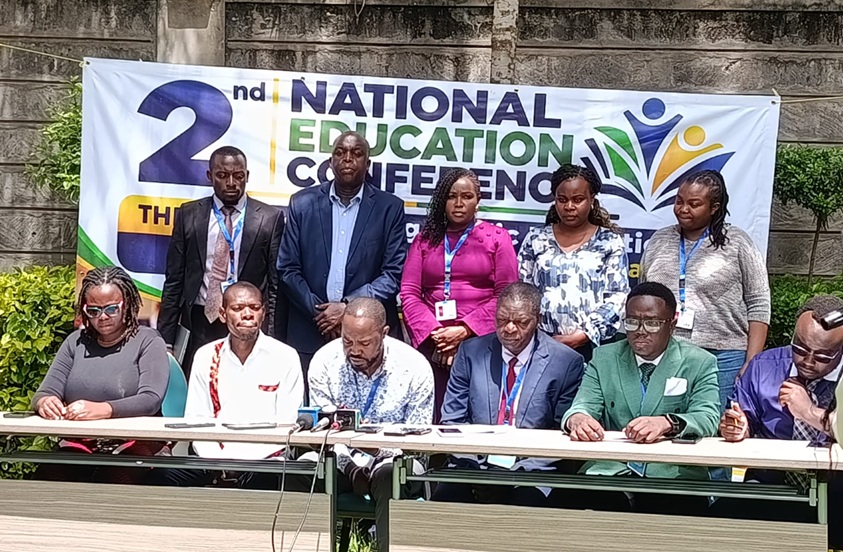
During the two‑day 2nd National Education Conference 2026, participants highlighted persistent gaps in financing and quality that leave children in marginalised communities behind.
Members of the Elimu Bora Working Group and other civil‑society partners urged the government to translate its education pledges into specific legislation, budget allocations and implementation timelines.
National Student Caucus Coordinator Ray Orek called for targeted interventions for learners in arid zones, children with disabilities, girls, street‑connected youth and other vulnerable groups, stressing that current disparities limit social mobility.
Parents Association of Kenya chairman Silas David Buhatsa appealed to the Ministry of Education and the Teachers Service Commission for a clear roadmap to absorb teachers employed by school Boards of Management, citing uncertainty over recruitment numbers and resources.
Buhatsa also demanded stronger enforcement of laws against illegal school levies, warning that unauthorised fees continue to bar poor families from free basic education and urging the Ministry to act on the parliamentary report on the issue.
East African Centre for Human Rights executive director Gilbert Onyango presented a joint statement with seven priority actions, including equitable, predictable funding aligned with Article 203 of the Constitution and a transparent plan for teacher absorption.
The statement called for stricter enforcement of existing statutes to stop illegal levies and for the government to back President William Ruto’s pledge that every child read, write and count by Grade 3 in 2030 with legislation, policy frameworks and annual public reporting.
Onyango urged lawmakers to publish the public participation report on the seven education bills before the National Assembly’s December recess, emphasizing the need for transparent, inclusive law‑making.
The joint statement was issued by a coalition of organisations including EACHRights, TISA, Akili Dada, RELI Africa, KHRC, the Elimu Bora Working Group and the Global Initiative for Economic, Social and Cultural Rights.


Comments