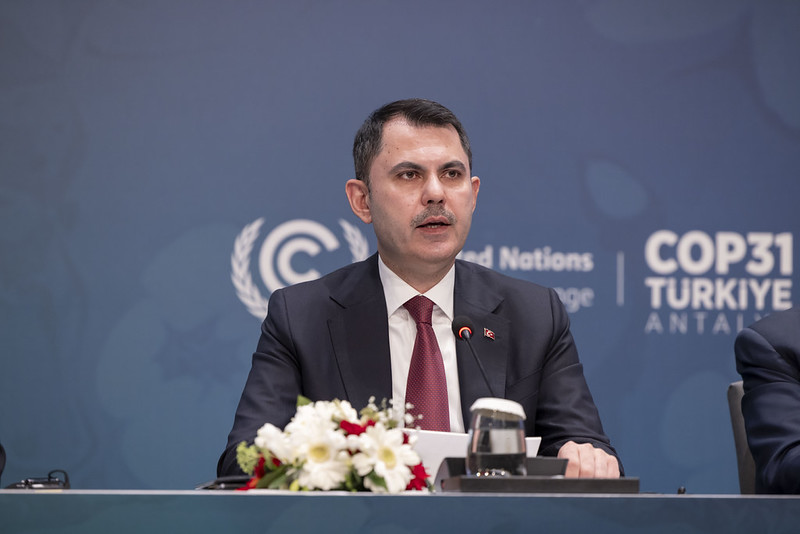
At the UN Climate Summit in Antalya, Turkey, the COP31 Presidency announced a Global Electrification Pledge that seeks to increase electricity’s share of global final energy consumption from about 23% today to 35% by 2035.
The pledge, described as the start of an “age of electricity”, draws on analysis by the International Energy Agency and the International Renewable Energy Agency, which view accelerated electrification as essential for limiting warming to 1.5°C.
COP31 President Murat Kurum said the recent energy crisis highlighted the risks of reliance on imported fossil fuels and reinforced the need for faster electrification to boost energy security and economic growth.
Implementation will require expanding renewable generation, modernising grids, investing in storage and mobilising substantial financing, especially in developing economies.
To support the agenda, the COP31 Presidency and the European Union will convene the first Electrification Forum, intended to become a regular platform for governments, financiers and industry stakeholders.
The International Energy Agency will provide technical assistance through a Global Electrification Tracking Mechanism to monitor progress at global and regional levels.
IRENA will lead the Enabling Distribution Grids for Electrification (D‑GRIDS) programme, helping developing countries identify infrastructure needs, prepare viable projects and access financing.
A new Electrify Now Finance Coalition, co‑chaired by the World Bank and African Development Bank from 2027, will bring together governments, development banks and private financiers to mobilise resources for electrification in emerging economies.
The Utilities for Net Zero Alliance announced an increase in its annual investment commitment for grids, renewable energy and storage from $148 billion to $156 billion, underscoring growing financial support for the transition.
Business groups such as the We Mean Business Coalition have rallied over 180 companies—including Volvo, Uber, IKEA and Siemens—representing more than $1.69 trillion in annual revenue to back accelerated electrification.



Comments