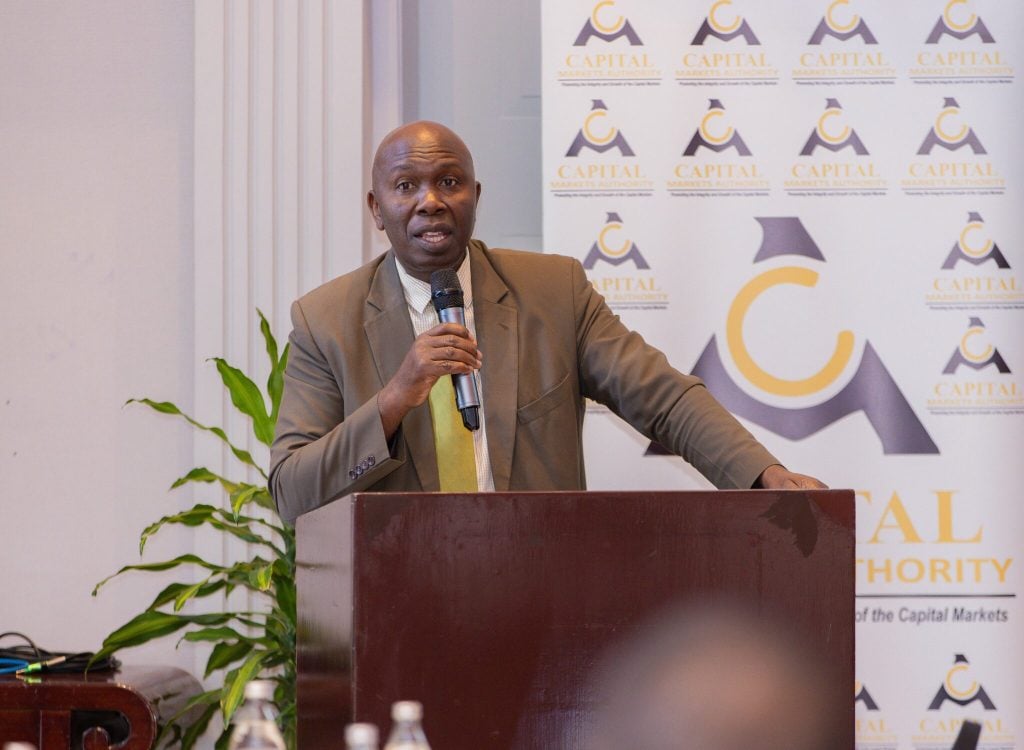
Kenya’s capital markets are seeing a surge in participation, with money‑market funds, ETFs, REITs and digital platforms widening access to financial products.
The Capital Markets Authority (CMA) says it is moving to risk‑based supervision, enhanced digital market surveillance and stricter enforcement against unlicensed investment providers.
Director of Market Regulation Daniel Warutere explained that the regulator must balance market development with investor protection, especially as collective investment schemes approach KSh1 trillion in assets under management.
TechTrendsKE reported that, as of 30 June 2026, the sector held KSh948.7 billion across 66 approved schemes, comprising 320 funds and about 4.14 million investors.
Because hundreds of firms now operate in the market, CMA has replaced its earlier compliance‑based, periodic on‑site inspections with a risk‑rating framework that allocates supervisory resources according to factors such as technology use, cyber‑risk exposure, investor base size and assets under management.
Firms serving large retail populations or operating technology‑driven platforms will face more intensive oversight, while lower‑risk entities remain supervised at a reduced frequency.
Digital channels have complicated market surveillance; CMA now integrates information from traditional media and social platforms to spot potential manipulation before it harms investors.
The regulator recently issued a public notice on 15 firms that were mobilising funds without the required licences and urges investors to verify a provider’s status via the CMA website’s licences and market players list.
CMA is also consulting reforms to Kenya’s REIT framework, proposing to lower the minimum investment from KSh5 million to KSh100,000 and reduce the public‑ownership requirement from 25 % to 15 %, aiming to broaden retail participation in property‑backed products.
To encourage public reporting of misconduct, CMA maintains a whistle‑blowing portal that rewards actionable intelligence with up to 3 % of recovered funds, capped at KSh5 million, and a separate complaints channel for broader concerns.
The authority also supports businesses seeking capital by providing checklist‑style application guides and direct engagement through its market‑deepening department, helping issuers navigate regulatory requirements for new products such as ETFs and sustainable finance instruments.


Comments