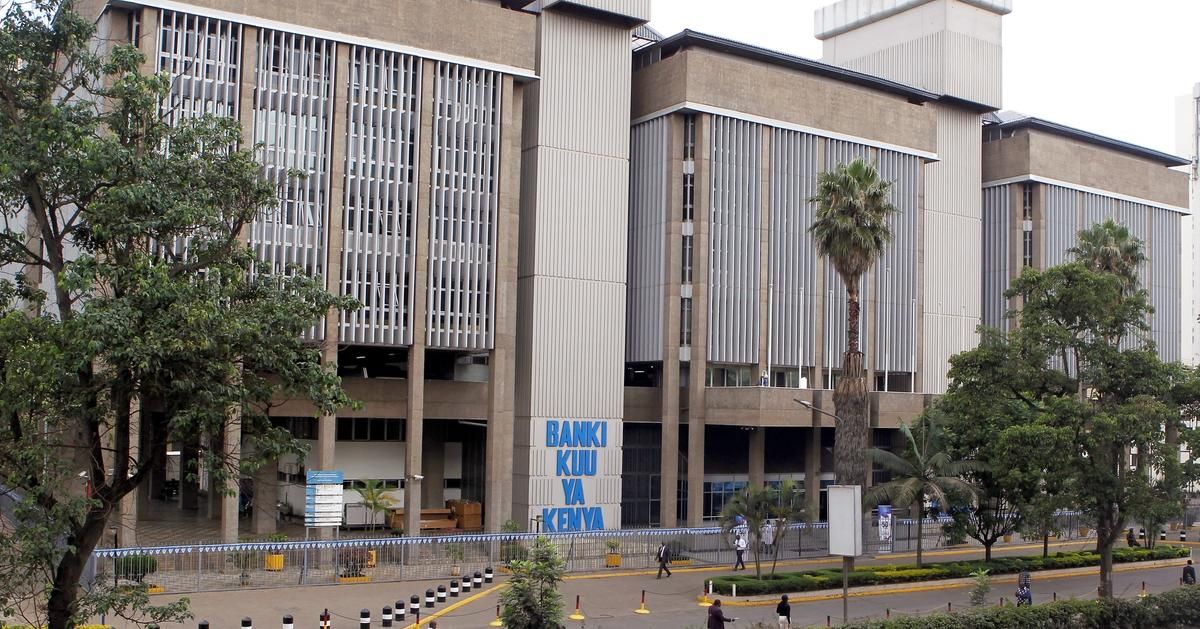
Governor Kamau Thugge told a press briefing on 24 November that the Central Bank of Kenya will integrate artificial‑intelligence (AI) and machine‑learning tools into its analytical work to improve the assessment of economic trends and support evidence‑based policy decisions.
The initiative adds a staff‑development component to a broader AI programme that the bank has been mapping across its units, with the aim of giving employees the technical competence to handle complex data sets.
In October, Director of Research Robert Mudida disclosed that CBK had identified nearly 300 potential AI applications across 14 departments, some of which are already being piloted.
Key focus areas include using alternative data—such as mobile‑money transaction flows, satellite‑derived night‑light and vegetation metrics, electricity consumption and online supermarket prices—to supplement traditional economic indicators that are released only at set intervals.
The bank plans to employ AI to match online‑supermarket product listings with the 330 items in the Kenya National Bureau of Statistics’ consumer‑price classification, providing a more frequent gauge of price movements.
Machine‑learning models are also being explored to augment inflation and growth forecasts, especially when official figures are not yet available, allowing researchers to detect patterns in large data sets that conventional models might miss.
A pilot AI‑powered chatbot in the Financial Markets Department and trials of agentic AI for selected operational tasks illustrate the bank’s interest in extending automation beyond research.
CBK stresses that AI tools will complement, not replace, official statistics, and that staff must be able to evaluate data quality, interpret outputs and recognise the limits of automated analysis.
The bank’s immediate task is to build this capability while the broader financial sector adopts similar digital‑decision frameworks, as reflected in Kenya’s 2026 regulations for non‑deposit‑taking credit providers that require explainability and human oversight of automated models.
Successful deployment will depend on whether CBK staff can translate AI‑generated insights into reliable research tools that inform monetary policy, borrowing costs and inflation expectations.




Comments