A journalist’s call should not trigger an internal search for who is allowed to speak. The organisation may have only an hour before a deadline, and the quality of its response will depend less on improvisation than on a protocol agreed when no one was under pressure.
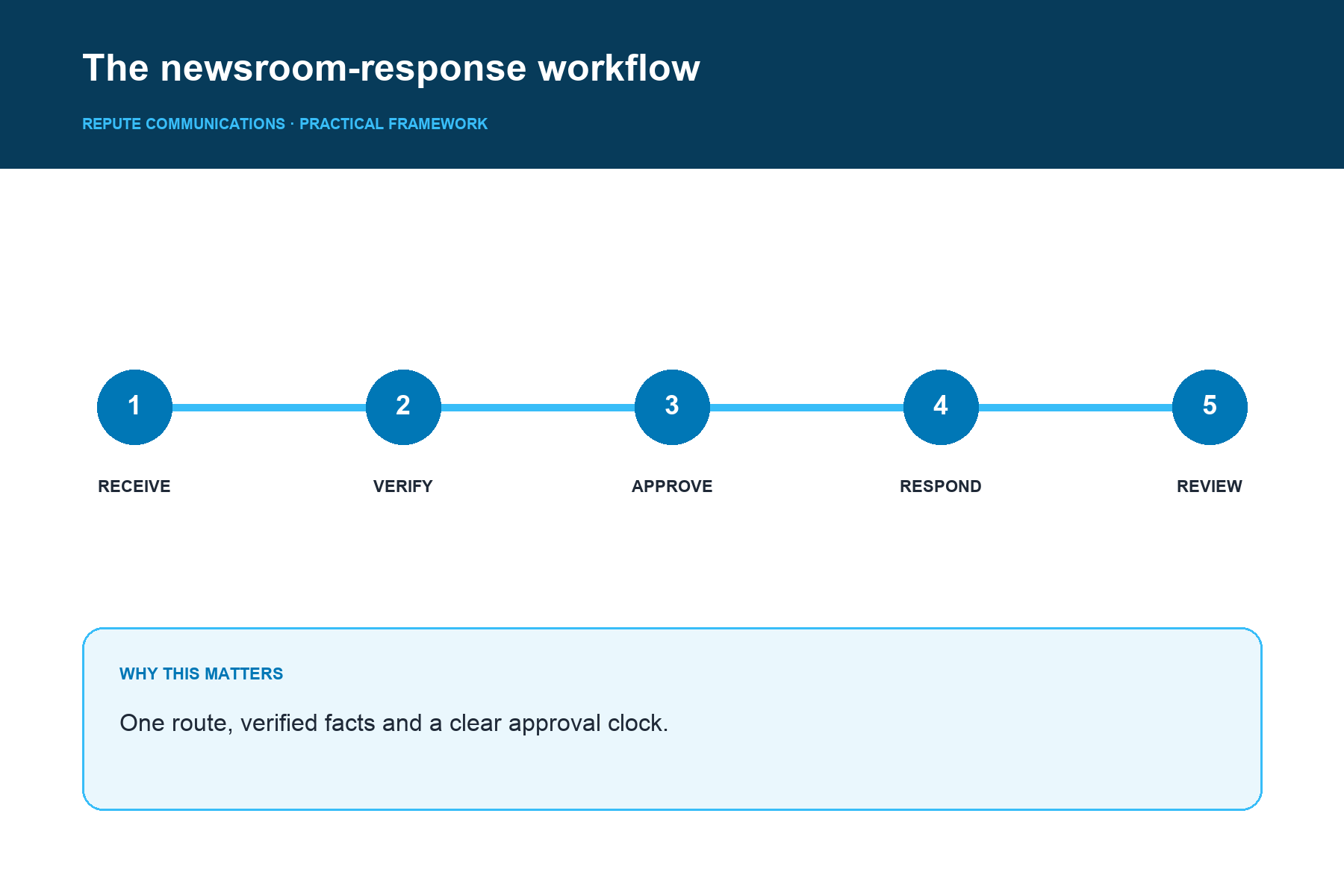
A media response protocol is a short operational document. It tells staff how to recognise and record an enquiry, who verifies the facts, who approves the answer, who speaks and what happens after publication. It protects speed without sacrificing accuracy.
One route for every enquiry
Reception, customer care, social teams and executives may all receive media questions. The protocol should give them one route—a monitored phone number, address or named media relations contact—and a standard intake form.
Record the journalist’s name, outlet, contact details, exact questions, stated deadline and whether the conversation is on the record. Staff should not demand the whole unpublished story as a condition for answering, and they should not assume that an informal message is off the record.
Confirm receipt quickly. If the deadline is unrealistic, propose a specific time for a verified response. Silence often leaves the article to proceed without the organisation’s facts.
Separate verification from approval
The subject specialist should verify facts; communications should make the answer clear; legal or compliance should identify genuine legal limits; and one accountable executive should approve. Combining all four roles in one senior person creates delay and blind spots.
The Media Council of Kenya’s Code of Conduct for Media Practice 2025 centres accuracy, fairness and objectivity and provides an ethical framework for responsible reporting. Organisations strengthen that process when they answer the questions asked, provide supporting records and distinguish verified facts from allegations or estimates.
An internal fact sheet should show what is known, what is unconfirmed, who owns each fact and when the record was last updated. The corporate communications function should preserve this source of truth across the media answer, employee note, website and customer response.
“No comment” is rarely a protocol. A responsible answer can acknowledge the question, state what is known and give a time for the next update.
Name the spokesperson and the backup
The chief executive need not answer every query. The best spokesperson is the person with authority, knowledge and the ability to stay clear under challenge. The protocol should name a primary spokesperson for common subjects and a backup when that person is unavailable.
Regular spokesperson preparation should cover bridging without evasion, correcting a false premise respectfully, explaining technical material in plain language and stopping rather than speculating. A short rehearsal against the actual questions is more useful than memorising a speech.
Prepare for the questions that carry risk
Some enquiries signal a developing issue rather than a routine request. The protocol should define escalation triggers: threats to safety, allegations against leaders, regulator involvement, data loss, litigation, viral complaints or questions from several outlets at once.
Those triggers should activate the issues-management process or crisis communications plan. WHO’s emergency communication guidance recommends rapid analysis of communication needs, talking points and frequently asked questions, coordination, media responses and frequent updates. While designed for health emergencies, the workflow is relevant to any fast-moving public-interest incident.
Pre-approved holding-statement structures help, but the facts must be new each time. The protocol should never encourage copying an old apology into a different event.
Keep a clean record and close the loop
Log the final questions, response, supporting documents, approval time and what was actually sent. After publication, media monitoring should check whether the response was represented accurately and whether a factual correction is needed.
If the organisation supplied an error, correct it promptly and notify the journalist. If the published story contains a material factual error, send a concise request identifying the sentence, the correct fact and the evidence. Do not mix the correction with complaints about tone or legitimate criticism.
The protocol should also specify retention and access. Media lists, contact details and sensitive briefing papers contain information that should not circulate indefinitely. Repute’s content development service can help prepare fact sheets, Q&As and evidence packs, while its about page explains the agency’s journalism-led approach.
Repute Communications supports organisations with media liaison and press engagement in Kenya and across Africa. Teams that want to test an existing response system can contact the agency before the next deadline begins.
Sources: Media Council of Kenya Code of Conduct for Media Practice 2025, WHO emergency communication guidance, Repute Communications media relations, Repute Communications crisis communications.



Comments