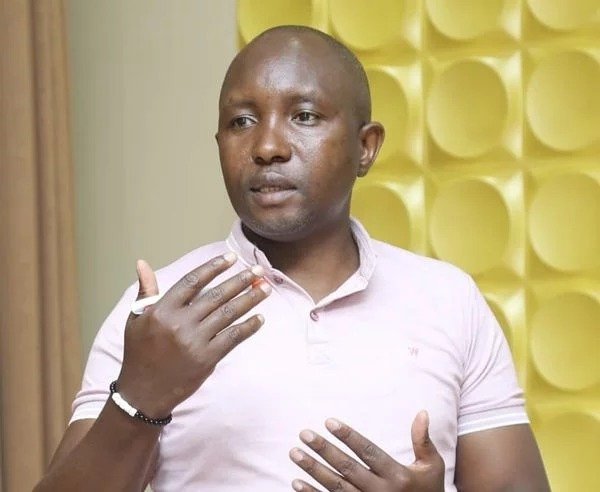
Activist Nelson Amenya has publicly claimed that he played a key role in uncovering the identity of a long running anonymous critic of preacher David Owuor, a revelation he says later exposed the critic to years of arrests, intimidation, and harassment.
In a detailed social media post, Amenya narrated events dating back to 2017, when an anonymous account known as “Owuor Unmasked” emerged on YouTube, Facebook, and X. According to Amenya, the account specialised in debunking what it described as fake or edited prophecies and exposed internal details from within Owuor’s inner circle.
Amenya said the account gained credibility because it consistently published information that appeared to come from deep inside the leadership of the Ministry of Repentance and Holiness, making it influential even among church members who lacked access to senior leadership.
He claimed the posts caused panic within the ministry, particularly after the anonymous account reported multiple YouTube channels linked to the church, leading to the suspension of videos dating back to 2006. Amenya described the incident as a major internal crisis, with pressure mounting to recover the accounts.
According to Amenya, he was at the time living in an apartment on Rhapta Road, Nairobi, which he said also served as part of the ministry’s head office operations. He stated that after identifying the critic only by an email address, he proposed a strategy to initiate contact using a third party email address to negotiate.
Amenya claims the plan involved lifting a strike against the anonymous account in exchange for the reinstatement of the ministry’s YouTube channels. During the email exchanges, he says he picked up clues that led him to identify the person behind the account and eventually obtained a phone number he believed confirmed the critic’s identity.
The individual, he alleged, was Ndungu Kiriga, also known online as ikev.
Amenya claimed that once the identity was established, the information was forwarded to the Directorate of Criminal Investigations. He further alleged that Owuor responded by deploying police officers to arrest Kiriga, marking the start of what Amenya described as a prolonged campaign of persecution.
According to Amenya’s account, Kiriga was allegedly arrested multiple times, often at night and in front of his family, transported to Eldoret, detained, and later released without charges. Amenya said the pattern of arrests and releases continues to date.
He further claimed that in court cases arising from the arrests, the complainant was not Owuor himself but his personal driver, which Amenya alleged was a deliberate strategy to maintain plausible deniability.
Amenya alleged that sustained pressure from police actions, legal threats, and harassment eventually forced Kiriga to delete his social media accounts and stop criticising Owuor publicly. He also claimed, without providing documentary proof, that police officers and lawyers involved were financially rewarded.
“I feel bad because it was me who uncovered his identity and led to his persecution,” Amenya wrote, expressing regret over his role in the events.
Neither Owuor nor the Ministry of Repentance and Holiness had responded to Amenya’s claims by the time of publication. The Directorate of Criminal Investigations had also not issued a public statement addressing the allegations.
The claims add to ongoing public debate about the use of state power, digital surveillance, and the treatment of critics linked to powerful religious and political figures in Kenya.